The Sprouting Company walked out of Shark Tank without a deal in October 2025. Founder Doug Evans had asked the Sharks for $500,000 for 5%, putting a $10 million valuation on the company. Kevin O’Leary and Daymond John both made offers, but Evans ultimately declined to give up the equity they wanted. (sharkary.com)
That might have been the end of the story for a typical Shark Tank company. It wasn't for The Sprouting Company.
By March 2026, Evans was reporting monthly revenue of more than $1 million, equivalent to a roughly $12 million annualized run rate. Entrepreneur reported the jump from about $200,000 in monthly revenue before the episode aired to $540,000 in December and more than $1 million by March. (entrepreneur.com)
The company also subsequently disclosed an outside investment from Atland Ventures.
So, what is The Sprouting Company worth now? The answer requires more care than the numbers circulating online suggest.
The Sprouting Company rejected a Shark Tank deal worth $500,000
Evans entered the Tank with an unusually aggressive valuation.
The ask was $500,000 for 5%, implying a $10 million post-money valuation. The company had generated about $1.5 million in revenue during its first roughly 18 months, according to figures reported from the pitch, with an average order value of around $109. Evans also told the Sharks that the sprouter cost approximately $15 to manufacture and sold for about $100. (sharktankblog.com)
The Sharks were interested in the product, but the valuation was the sticking point.
Kevin O'Leary offered $500,000 for 25%. Daymond John subsequently made a similar offer. Accounts of the negotiation differ slightly on the precise intermediate terms, but the consistent outcome is that Evans was unwilling to surrender the amount of equity the Sharks wanted. The final televised result was no deal. (sharktankblog.com)
That distinction matters because some Shark Tank databases now describe the episode as though Evans simply failed to attract investment. He did attract offers. He rejected them.
The difference is significant.
The business was already selling more than a $100 jar
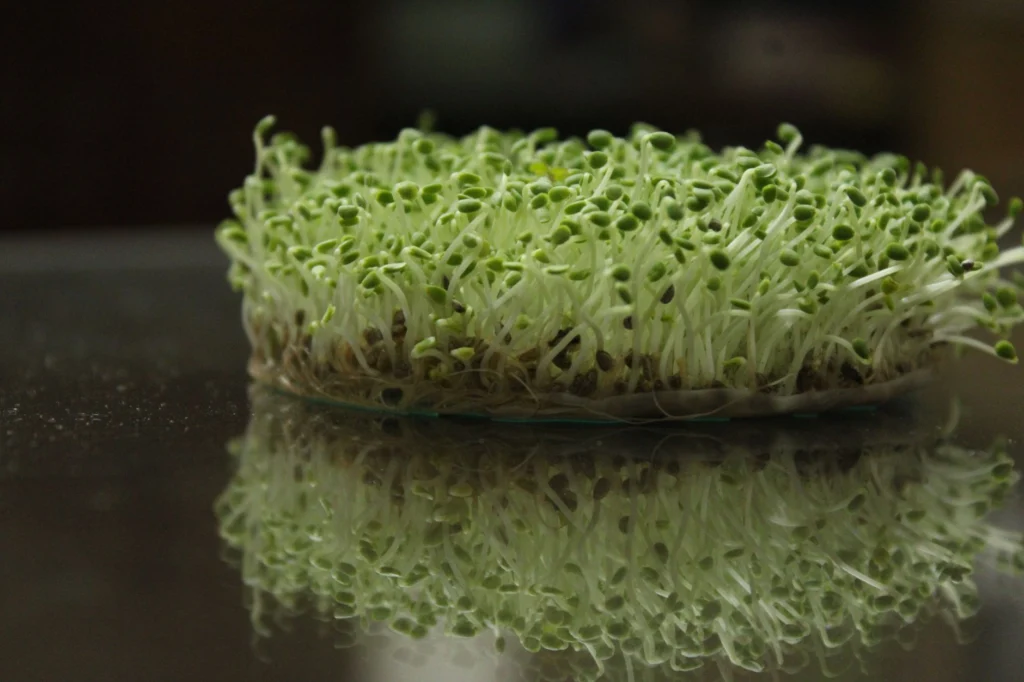
The Sprouting Company's proposition is straightforward: instead of buying fresh sprouts, customers grow them themselves.
Its countertop sprouter uses a wide-mouth glass vessel, stainless-steel filtration and a stand designed for drainage and airflow. Customers soak seeds, rinse them twice a day and harvest in several days. The company also sells organic seeds and recurring seed subscriptions. (thesproutingcompany.com)
The recurring component is particularly important to understanding the business.
Evans explained the strategy after Shark Tank as a move away from the economics of his previous company, Juicero. Rather than repeatedly selling a piece of hardware and leaving customers with it, The Sprouting Company can sell the hardware once and continue selling seeds.
Entrepreneur reported that the company had been doing about $200,000 a month before the Shark Tank episode, reached $540,000 in December 2025, and was above $1 million a month by March 2026, according to Evans. (entrepreneur.com)
Those are founder-reported revenue figures, not audited financial statements. The $12 million figure that appears in coverage is therefore best understood as an annualized run rate, not proof that the company generated $12 million in actual 2026 revenue.
That is an important distinction when discussing the company's "net worth."
The Sprouting Company is still operating, and its own numbers show a much larger customer base
The company's current website is not a dormant Shark Tank landing page.
It is actively selling sprouters, starter bundles, organic seed varieties and subscriptions. Its flagship sprouter is currently listed at $99.99, while starter bundles are priced around $97 to $103 depending on the seed configuration. (thesproutingcompany.com)
More strikingly, the company currently claims 100,000+ sprouters sold and placement in 104,000+ kitchens. Its site also displays a 4.9/5 average rating. (thesproutingcompany.com)
Those are company-reported figures, so they should not be treated as independently audited customer or sales data. But they do provide a much firmer indication of the company's current operating status than the speculative "net worth" figures published by Shark Tank aggregator sites.
The company has also added an iOS sprouting app, seed subscriptions and an expanded range of products. (thesproutingcompany.com)
In other words, The Sprouting Company is not merely surviving on the publicity from its television appearance.
An outside investor backed The Sprouting Company after the Sharks passed
There is another important development that many early Shark Tank recaps missed.
Atland Ventures publicly announced that it had invested in The Sprouting Company. In its announcement, the venture firm described the investment as having been made earlier in the summer and said it was backing the company as it continued to grow. Evans publicly acknowledged the investment. (linkedin.com)
The amount of that investment has not been publicly disclosed in the source announcing it.
That means it would be misleading to take the investment and reverse-engineer a precise company valuation from it.
This is also why some current websites claiming that The Sprouting Company's net worth is exactly $300,000, $3.5 million or $5 million should be treated skeptically. Those numbers are not supported by a publicly disclosed valuation.
The available evidence points in the opposite direction: an operating company with substantial reported revenue growth, an outside venture investor and a growing installed customer base.
So what is The Sprouting Company's net worth?
There is no verified public figure for The Sprouting Company's current net worth or valuation.
The clearest hard valuation numbers come from the Shark Tank negotiation itself:
- Evans' ask: $500,000 for 5%, implying $10 million
- Kevin O'Leary's initial offer: $500,000 for 25%, implying $2 million
- Daymond John made a comparable offer
- The eventual negotiation reportedly moved toward a joint deal around 15%, which would imply roughly $3.33 million if $500,000 bought the full 15% (sharkary.com)
None of those numbers establishes what the company is worth today.
They are negotiation points from 2025.
The post-Shark Tank revenue trajectory makes the situation even harder to reduce to one number. Evans later reported more than $1 million in monthly revenue. At that level, a $3 million valuation would represent only about three months of that reported revenue, while a $10 million valuation would be below one year's annualized revenue.
But revenue is not valuation. A private consumer-products company can be worth substantially more or less than a simple revenue multiple depending on margins, customer acquisition costs, recurring revenue, growth, inventory, liabilities and the terms of its financing.
So the most defensible answer to "The Sprouting Company Shark Tank net worth" is: the current valuation is not publicly established.
The $10 million figure is the founder's Shark Tank valuation, not a confirmed 2026 net worth.
The Shark Tank exposure appears to have mattered even without a Shark
The interesting part of the story is that The Sprouting Company did not need a Shark to produce the outcome Evans wanted from the appearance.
The company went from roughly $200,000 in reported monthly revenue before the episode to $540,000 in December and more than $1 million by March, according to Evans' account reported by Entrepreneur. (entrepreneur.com)
That doesn't prove Shark Tank alone caused the increase. Revenue can move because of advertising, product launches, seasonality, distribution, repeat purchasing and other factors.
But the timing is difficult to ignore.
The company was also able to attract venture backing after the television appearance. Atland Ventures' public announcement confirms that outside capital eventually came in, even though the Sharks' money did not. (linkedin.com)
That changes the interpretation of the episode.
Evans didn't leave with the $500,000 he wanted. He also didn't leave with the lower valuation the Sharks were trying to impose. Instead, he retained control and continued building the business.
The Sprouting Company is a different story from Doug Evans' Juicero failure
The founder's history makes the company's progress more notable.
Evans was previously associated with Juicero, the heavily funded startup that raised $135 million before shutting down after becoming one of Silicon Valley's most notorious startup failures. Entrepreneur notes that Evans has described that experience as a major personal and business lesson. (entrepreneur.com)
The Sprouting Company is almost the inverse business model.
Juicero involved expensive hardware, proprietary juice packs and a complicated refrigerated supply chain. The Sprouting Company sells a relatively simple physical product and recurring seeds, with customers doing the growing themselves.
That simplicity is central to Evans' explanation of why this company is different.
The current business is also tangible in a way that speculative Shark Tank "net worth" pages often obscure. There are products for sale, subscriptions, an app, customer reviews and a large installed base claimed by the company.
As of August 2026, The Sprouting Company is clearly still in business. Its current website is active, its products remain available, and the company says more than 100,000 sprouters have been sold. (thesproutingcompany.com)
What cannot be established from public information is the exact valuation attached to that business today.
That is the part worth resisting when answering the search query. The Sharks' $10 million disagreement was real. The subsequent $1 million-plus monthly revenue claim is real as a reported figure. Atland Ventures' investment is real. But a precise 2026 "net worth" is not publicly documented.
The better answer is therefore not that The Sprouting Company is worth some convenient number pulled from an aggregator. It is that the company left Shark Tank without a deal, kept building, attracted outside investment and reported a dramatic increase in revenue afterward. Its current valuation remains private.