Legacy Shave is still in business, but the most important part of its Shark Tank story happened after the cameras stopped rolling: the $700,000 deal Lori Greiner agreed to on television apparently did not close.
That distinction gets lost in a lot of current coverage. Legacy Shave's own website is still operating, the company is still selling its signature brush, shaving cream, razors and gift sets, and it is still explicitly marketing products as "Shark Tank Specials." (legacyshave.com)
But there is no good primary-source evidence that Greiner ultimately acquired 95% of Legacy Shave. The strongest reporting on the post-show process says the agreement did not make it through due diligence. So the cleanest answer to "whatever happened to Legacy Shave?" is more interesting than a simple Shark Tank success-or-failure label: the deal appears to have fallen apart, while the business itself survived.
Legacy Shave entered Shark Tank with $1 million in lifetime sales, but its recent numbers were falling
Mike Gutow appeared on Season 14 of Shark Tank asking for $300,000 for 10% of Legacy Shave, a valuation of $3 million.
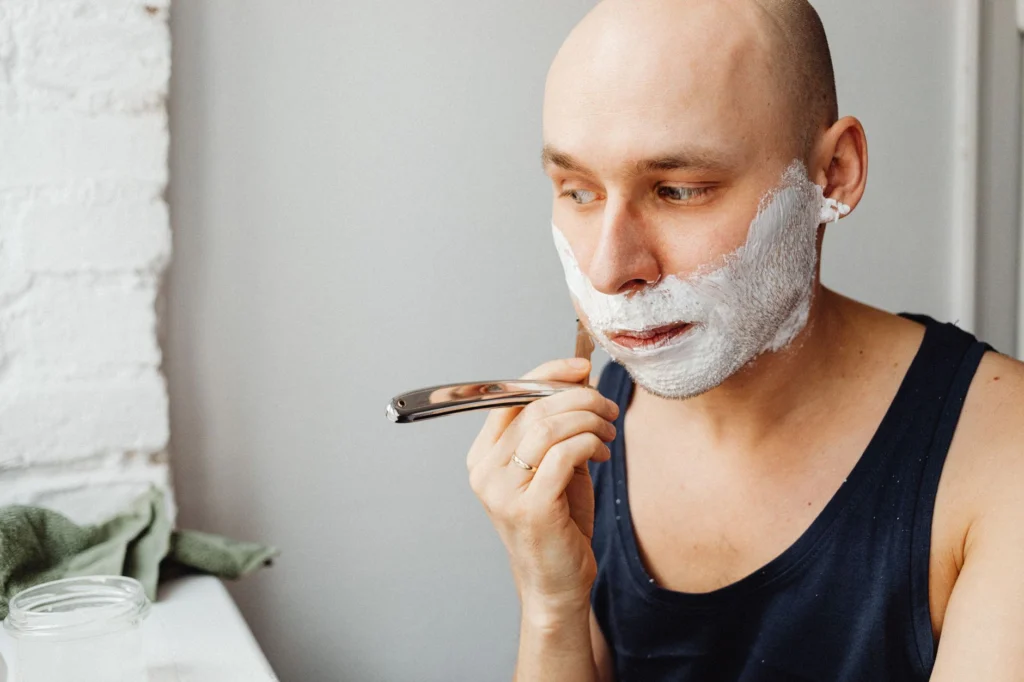
The product was a patented shaving brush attachment designed to connect directly to an aerosol shaving-cream or gel can. Instead of dispensing shaving cream into a person's hand, the system pushes it through the brush, combining the convenience of a modern can with the technique of a traditional shaving brush. Legacy Shave says the brush is designed to lift hair follicles and create a closer shave while using less cream. (legacyshave.com)
The business had a compelling family history. Mike and his brother Dave had developed the idea years earlier, but never properly launched it. After their father died, the brothers discovered that he had assembled the original 3,000 units himself while undergoing chemotherapy. That discovery finally pushed them to take the product seriously. ABC's official episode description confirms that the brothers had been working on the invention for decades before bringing it to market. (abc.com)
The financial picture, however, was much less comfortable.
During the pitch, Gutow said Legacy Shave had generated more than $1 million in lifetime sales and sold more than 100,000 units over five years. But annual sales had deteriorated sharply: roughly $70,000 in 2018, $370,000 in 2019, $390,000 in 2020, $96,000 in 2021 and just $42,000 in 2022 at the time of filming, with another $63,000 purchase order pending. The family had also put more than $400,000 into the company. (sharktankblog.com)
That decline explains why the Sharks were cautious even though they liked the product.
Lori Greiner offered $700,000 for 95% of Legacy Shave
The other Sharks passed.
Lori Greiner saw enough in the patent and the product's interchangeability to make an offer. Her initial proposal was $1 million for 100% of Legacy Shave, plus a 3% royalty on net sales for life.
Gutow wanted to retain part of the company. After negotiating, Greiner changed the offer to $700,000 for 95%, with the 3% royalty still attached. Gutow accepted it on camera. (sharktankblog.com)
That is the deal most Shark Tank databases still list.
It is also why some articles describe Legacy Shave as a Lori Greiner-owned company.
The problem is that an agreement made on Shark Tank is not necessarily the final legal transaction. The parties still have to complete due diligence and negotiate the definitive documents after filming.
And in Legacy Shave's case, the evidence indicates that process did not end with Greiner taking ownership.
The Lori Greiner deal apparently never closed
The best documented post-show account is Shark Tank Blog's reporting that, as of August 2023, the Greiner deal had not officially closed. The same report says subsequent accounts indicated that the agreement ultimately fell through during due diligence. (sharktankblog.com)
That is a materially different outcome from the one shown on television.
There is also an important limitation here: the precise reason the deal failed has not been publicly established in a reliable primary source. It would be tempting to fill that gap with speculation about valuation, finances, patents or due-diligence concerns, but there is not enough evidence to do that responsibly.
So the defensible version is simply this: Lori Greiner agreed to the deal on the show, but available reporting indicates that the transaction did not close.
That also means claims that Lori currently owns 95% of Legacy Shave should not be treated as established fact.
The Shark Tank exposure worked even without the Shark
If the investment did not materialize, the television exposure certainly did.
Just four days after the Shark Tank episode aired in November 2022, Legacy Shave appeared on QVC. QVC still has a product page for a Legacy Shave two-brush and shaving-cream set, and QVC published a video of the product presentation on November 23, 2022. (qvc.com)
According to post-show reporting, that appearance moved 2,500 units and brought in more than 800 customers. The sudden demand also created an inventory problem that lasted into 2023. (sharktankblog.com)
That sequence matters because Legacy Shave was running out of money when Gutow walked into the Tank. The exposure did not solve the business's underlying challenges overnight, but it gave the company something it badly needed: customers.
By June 2023, the company had reportedly replenished inventory and resumed regular shipping. It also broadened its range beyond the original brush to include shaving cream, razors, balm and gift sets. (sharktankblog.com)
Legacy Shave is still selling products in 2026
The clearest evidence of Legacy Shave's current status is not an estimated "net worth" figure from a Shark Tank database. It is the company's own storefront.
As of August 2026, Legacy Shave's official website is active and accepting orders. The company says it is currently shipping to the United States, excluding Alaska and Hawaii. Its catalog includes the original brush, replacement shaving cream, razors, soaps, accessories and several gift sets. (legacyshave.com)
The pricing also shows that the company has continued developing the product line rather than simply maintaining an old Shark Tank listing.
The Shark Tank brush is currently offered individually and in multipacks, while the broader catalog includes a five-blade razor, a double-edge safety razor, shaving cream with aloe, replacement blades, custom-finish brushes and bundled gift sets. (legacyshave.com)
The company's homepage still identifies the business as being based in Royal Oak, Michigan, and continues to promote its Shark Tank appearance alongside its current products. (legacyshave.com)
So there is little basis for saying Legacy Shave shut down.
The widely quoted $6 million or $7 million valuation is not something Legacy Shave has publicly established
This is where current Legacy Shave coverage becomes unreliable.
Several websites now publish estimates placing the company at roughly $6 million to $7 million, sometimes alongside claims of approximately $1.9 million in annual revenue. Those figures are estimates repeated by third-party sites, not financial figures that Legacy Shave has publicly released. (sharktankblog.com)
There are even conflicting estimates elsewhere, which is a good reason not to turn any one of them into a supposed fact.
What can be verified is much narrower: Legacy Shave reported more than $1 million in lifetime sales when it appeared on Shark Tank, experienced a major demand spike after the episode, and remains an operating e-commerce brand with a substantial product catalog in 2026. (sharktankblog.com)
Its current valuation and annual revenue are not publicly verified enough to state as settled numbers.
Legacy Shave's real Shark Tank outcome is a business that survived without the deal
The irony of Legacy Shave's Shark Tank story is that the deal viewers watched is probably not the deal that shaped the company.
Lori Greiner offered $700,000 for 95% of the business, and Mike Gutow accepted. But available reporting indicates that the agreement did not close. Meanwhile, the episode sent customers toward the company, QVC gave it another sales channel almost immediately, and Legacy Shave eventually expanded its product range.
Four years later, the company's own website provides the most useful update: Legacy Shave is still selling, still shipping, and still selling products built around the patented brush concept that Gutow brought into the Tank. (legacyshave.com)
So if the question is whether Legacy Shave got Lori Greiner's $700,000, the answer appears to be no.
If the question is whether Legacy Shave disappeared after Shark Tank, the answer is also no.
The more accurate story is that the company walked away from one of the most dramatic deals of Season 14 without a confirmed Shark investment, but managed to turn the attention surrounding that deal into something more durable: a still-operating shaving brand.