Shahira Marei walked into the Shark Tank in 2022 asking for $500,000 for 5% of Dirty Cookie, putting a $10 million valuation on a company that was generating millions in annual sales but struggling to make enough profit.
The numbers were the problem.
Dirty Cookie was selling a dozen edible cookie shot glasses for $49.99, while the company said its cost to produce them was roughly $12.82 per dozen. Sales had risen from $300,000 in 2018 to $345,000 in 2019 and $1.27 million in 2020. For 2021, Marei projected $2.6 million in sales, but expected profit was only around $250,000. (sharktankblog.com)
The reason was unusually simple: the cookies were still being made by hand.
Marei wanted the Shark money to help buy an Italian machine that could dramatically increase production. The machine was reported to cost about $400,000 and could produce around 4,000 cookie shots per hour, compared with roughly 15,000 shots a week from her team at the time. (sharktankblog.com)
The Sharks liked the product considerably more than they liked the economics.
Robert Herjavec eventually offered $500,000 for 25% of the company, with the equity potentially falling to 15% if Dirty Cookie reached its specified sales target. Marei accepted.
But there is a catch that many Dirty Cookie Shark Tank update articles gloss over: the television deal did not appear to close.
Dirty Cookie had impressive sales, but the Sharks saw a manufacturing problem
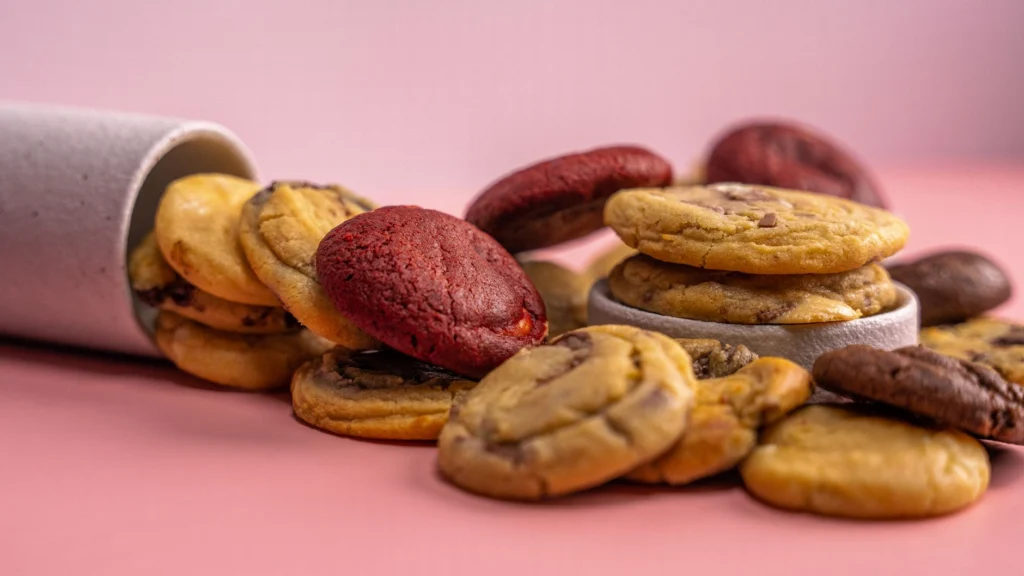
Dirty Cookie's signature product was an edible cookie cup designed to hold milk, coffee, ice cream, liqueur or other beverages. The company had also developed stuffed cookies and customizable gifting products.
The concept had found a market. The bigger question was whether the company could serve that market profitably.
Marei told the Sharks that the business had about $500,000 in debt and that she was still the sole owner when she entered the Tank. She also described ambitions to reach approximately $6 million in sales. (sharktankblog.com)
That combination caught the Sharks' attention for the wrong reasons.
Mark Cuban questioned the capital efficiency of the business. Kevin O'Leary objected to the cost structure. Daymond John was concerned about the profit opportunity. Robert Herjavec initially backed away as well. (sharktankblog.com)
Lori Greiner was the first Shark to make a serious offer. She proposed $250,000 in cash for 25% equity alongside a $250,000 loan at 8% interest.
Then Herjavec came back into the negotiation.
His final offer became $500,000 for 25%, with his stake potentially dropping to 15% if Dirty Cookie achieved the agreed sales milestone. Marei accepted Herjavec's offer on the televised episode. (sharktankblog.com)
On television, that looked like the end of the story.
It wasn't.
The $500,000 Robert Herjavec deal apparently never closed
This is where the standard Shark Tank recap becomes misleading.
The episode showed Marei accepting Herjavec's offer, and contemporary coverage reported the transaction as a $500,000 deal. But a later update from Shark Tank Blog reported that the deal had not closed by the first rerun of the episode in July 2022. By December 2022, the same publication reported that it still had not closed. (sharktankblog.com)
That distinction matters.
A deal accepted on Shark Tank is not necessarily the same thing as a completed investment. After filming, deals can go through due diligence and renegotiation before either side ultimately signs and funds the transaction.
In Dirty Cookie's case, the publicly available evidence does not establish that Herjavec ultimately became an equity investor.
There are still websites in 2026 that list Herjavec as Dirty Cookie's investor and repeat the on-air terms. But those pages largely trace back to the televised agreement rather than providing evidence that the investment actually closed. (sharktanktales.com)
So the careful version of the Dirty Cookie Shark Tank update is: Marei accepted Herjavec's offer on television, but the deal was reported as unclosed afterward, and I could not find a reliable primary-source confirmation that it was subsequently completed.
That is different from saying the company failed.
Dirty Cookie did not disappear after Shark Tank
The company itself is much easier to verify than the investment.
Dirty Cookie's official website is currently operating and selling its original cookie shots alongside a broader range of stuffed cookies. Its current catalog includes Chocolate Chip Cookie Shots, Red Velvet Cookie Shots, Cookie Shot Assortments and stuffed varieties such as Chocolate Chip with Hazelnut Spread, Double Chocolate Salted Caramel and Peanut Butter & Jelly. Current products start around $36.99 for several assortments. (dirtycookie.com)
The company's own story also says that its Shot for Education program has helped more than 600 children since 2021. Dirty Cookie says it selects an education-focused nonprofit each month and donates 1% of proceeds toward educational initiatives. (dirtycookie.com)
That gives us something the usual "Shark Tank update" formula often misses: there is direct evidence that Dirty Cookie is still selling products under the brand today.
The business has also expanded beyond the original cookie-shot concept. Its current website puts stuffed cookies alongside the signature shots, suggesting that the company is no longer relying on one novelty product to define the entire business. (dirtycookie.com)
The company's recent story is more complicated than a simple Shark Tank success
A recent post from EO New York City, highlighting Marei as a member, gives a much more revealing description of what happened after the show.
According to the organization, Dirty Cookie came close to shutting down less than a year before the post, before Marei pushed through the difficulties and expanded the brand into national retail. The post says Dirty Cookie products are now stocked at Kroger and Walmart and that the company has also experimented with vending machines serving warm cookies. (linkedin.com)
That is a substantial development, but it deserves the same qualification as the Shark Tank deal.
The retail expansion is being reported by EO New York City rather than in a detailed financial filing from Dirty Cookie, so it would be premature to turn that announcement into a precise claim about revenue, valuation or profitability.
Still, it changes the picture considerably.
The company that entered the Tank with a production bottleneck and a $400,000 machinery problem is now being described as a brand pursuing mass retail distribution. That is a very different operating model from the small, labor-intensive business the Sharks saw in 2022.
Dirty Cookie's current business is easier to verify than its current valuation
There is no reliable public figure I could find that establishes Dirty Cookie's current annual revenue, valuation or net worth.
That is worth saying because Shark Tank update pages routinely publish estimated company valuations and "net worth" figures as if they were audited facts. They are not.
One frequently repeated figure puts Dirty Cookie's revenue at around $2.5 million in 2024, but the underlying public evidence is not strong enough to treat that number as definitive. Likewise, claims that Marei achieved the sales threshold that would have reduced Herjavec's stake are not backed by a current primary-source disclosure I could verify.
What can be established is narrower and more useful.
Dirty Cookie is still operating. Its official ecommerce store is active. Its product range has expanded. Its founder remains publicly associated with the company. And a 2026 EO New York City post describes new retail distribution through Walmart and Kroger after a period in which Marei said the business had faced serious survival challenges. (dirtycookie.com)
What cannot be established with the same confidence is whether Robert Herjavec ever actually funded the $500,000 investment agreed to on television.
The real Dirty Cookie update is about surviving the problem the Sharks identified
The most interesting part of Dirty Cookie's story is not that a cookie company got a Shark Tank deal.
It is that the Sharks correctly identified the company's central weakness: demand was not the problem. Production economics were.
Marei had already demonstrated that customers wanted the product. Her sales had climbed rapidly, particularly during the pandemic, when Dirty Cookie shifted toward ecommerce and gifting. But making every cookie shot by hand put a ceiling on how much the company could sell while keeping costs under control. (sharktankblog.com)
The company did not follow the neat Shark Tank storyline in which an investor arrives, writes a check and solves the problem.
Instead, the publicly documented story is messier. The televised Herjavec deal was later reported as unclosed. Dirty Cookie continued developing products, pursued new channels, and survived enough setbacks to reach national retail.
Today, the cookie shots are still on sale. The stuffed cookies are still on sale. And Dirty Cookie's own site still describes the company as an operating brand with an education-focused mission. (dirtycookie.com)
For a company whose biggest problem on Shark Tank was figuring out how to make enough cookies without destroying its margins, staying in business was never the only test.
The more telling update is that Dirty Cookie appears to have kept changing the business until the original production problem was no longer the whole story.
If your company or product is mentioned in this article, you're welcome to share it.