Daisy Cakes is still in business, but the biggest change happened after the headlines stopped: founder Kim Nelson is no longer running the company.
Nelson sold Daisy Cakes in 2024 to Marshall Langley, a longtime employee who had started working with the bakery as a teenager. By then, the company had recorded more than $11 million in sales, according to a November 2024 profile in TOWN Carolina. (towncarolina.com)
That makes Daisy Cakes a more interesting Shark Tank story than the usual “company got a deal and grew” summary. The business did grow dramatically after Barbara Corcoran invested. It also ran into a serious production failure, recovered, expanded across the country, and eventually changed owners.
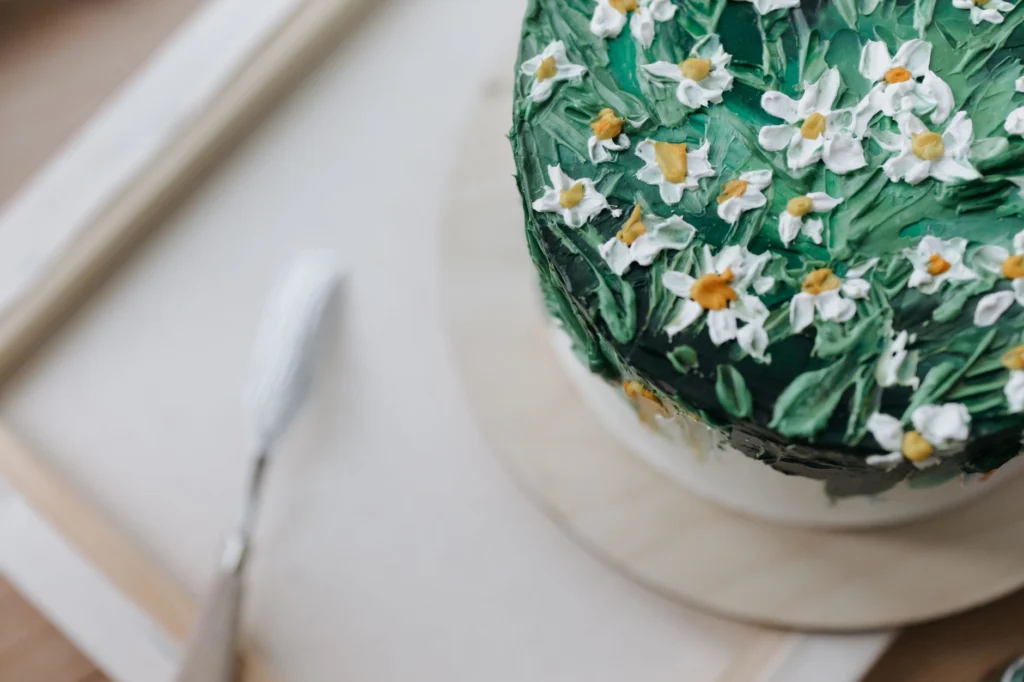
And unlike many old Shark Tank businesses whose websites have disappeared, Daisy Cakes is still operating. Its current site continues to sell its signature layer cakes, Cake in a Jar products, gluten-free and vegan options, gift cards and other products. (ilovedaisycakes.com)
Barbara Corcoran invested $50,000 when the business was still tiny
When Kim Nelson walked into Shark Tank in 2011, Daisy Cakes was nowhere near the multi-million-dollar business it would eventually become.
Nelson asked for $50,000 in exchange for 25% of the company. At the time, Daisy Cakes was essentially a small family operation. Nelson and her mother were making the cakes, and the company had generated $27,000 in sales over the previous three months. The cakes sold for roughly $44.50 each, according to Daisy Cakes' own retrospective of the pitch. (ilovedaisycakes.com)
Four Sharks passed.
Kevin O'Leary, Kevin Harrington, Daymond John and Robert Herjavec all questioned whether a small mail-order cake company could become large enough to justify an investment.
Corcoran initially had similar concerns. But she noticed something the others were overlooking: after rejecting the deal, the other Sharks kept eating the cake.
She offered Nelson the requested $50,000 for 25%, with an additional $1 paid to Corcoran for each cake sold until her investment was recovered. Nelson accepted. ABC News later confirmed the deal terms and described Corcoran's reasoning as a bet on both the product and Nelson herself. (abcnews.com)
It turned out to be a very different business from the one the Sharks saw in the room.
Shark Tank immediately created a problem Daisy Cakes was not prepared for
The television exposure worked almost too well.
After the episode aired, Daisy Cakes was hit with a surge of orders. Nelson later told Kiplinger that the company received more than 2,000 orders in 48 hours. The website and phone lines were overwhelmed, and the small operation suddenly had far more demand than it could comfortably fulfill. (kiplinger.com)
Daisy Cakes tried outsourcing production to larger bakeries in Georgia, New York and Tennessee.
That became one of the company's biggest operational mistakes.
According to Nelson's account to Kiplinger, the outsourced cakes did not meet the quality customers expected. Daisy Cakes refunded customers, sent replacement cakes and eventually brought production back closer to home. The company had to rely on credit cards to keep paying its bills while it recovered. (kiplinger.com)
The episode became an early lesson in the difference between generating demand and being able to fulfill it.
Daisy Cakes grew from a tiny kitchen operation into a national bakery
The recovery was substantial.
By 2012, when Daisy Cakes returned to Shark Tank for an update, Nelson said the company was doing about $100,000 in monthly sales. The business had moved into a larger commercial bakery and was shipping cakes around the country. (foodrepublic.com)
ABC News reported that Daisy Cakes had already sold more than 25,000 cakes across all 50 states, including Alaska and Hawaii, by May 2012. At that point, the company was also using a Tennessee bakery employing 240 people for production. (abcnews.com)
That production model did not remain permanent. Nelson eventually brought more of the operation back under her direct control because maintaining the quality of the family recipes was central to the brand.
The business also expanded geographically. A second bakery was established in Las Vegas to serve customers in the western United States more efficiently. (foodrepublic.com)
The numbers kept moving.
Nelson reported lifetime sales of $8.5 million when she appeared on Shark Tank again in 2020. (foodrepublic.com)
By November 2024, TOWN Carolina reported that Daisy Cakes had passed $11 million in cumulative sales. (towncarolina.com)
Those figures are cumulative sales, not company valuation or Kim Nelson's personal wealth. That distinction matters because a number of online Shark Tank sites now publish estimated “net worth” figures without a disclosed transaction or audited financial statements behind them.
There is no reliable public source establishing a precise current valuation for Daisy Cakes.
The biggest Daisy Cakes setback involved nearly 7,000 cakes
The growth story was not completely smooth.
Daisy Cakes eventually suffered a major production failure after expanding its manufacturing operation. Food Republic reported in 2025 that nearly 7,000 cakes were lost, costing the company about $165,000. The same account said those cakes represented roughly $300,000 in potential revenue. (foodrepublic.com)
Rather than continuing with the supplier, Nelson moved production closer to home so she could exercise greater control over the process.
That decision fits the larger pattern of Daisy Cakes' history. The company did not become successful simply by increasing production as quickly as possible. It repeatedly had to balance scale against the thing customers were actually buying: cakes made according to a family recipe.
That is also why the business remained unusually tied to its founder for so long.
Kim Nelson sold Daisy Cakes in 2024
The most significant recent change is the one many older Shark Tank update pages miss.
Kim Nelson is no longer the owner.
In August 2024, she sold Daisy Cakes to Marshall Langley, a longtime employee who had joined the company as a teenager. TOWN Carolina reported that Langley had started working at Daisy Cakes at 15 and eventually became the person Nelson trusted to take over the business and its recipes. (towncarolina.com)
Nelson's decision came after her mother, Geraldine, suffered a serious fall, broke her hip and died in 2022. Nelson also had become a grandmother. She told TOWN Carolina that after her mother's death, the business no longer felt the same because she and her mother had built it together. (towncarolina.com)
The ownership change was therefore less about Daisy Cakes failing and more about Nelson deciding that she was ready to leave.
The financial terms of the sale have not been publicly disclosed. Claims online about what Nelson personally made from the transaction should therefore be treated as estimates, not established facts.
Marshall Langley is now building the next version of Daisy Cakes
Langley did not buy Daisy Cakes merely to preserve an old Shark Tank brand.
Under his ownership, the company has continued selling its traditional layer cakes while expanding the product range. A recent industry interview with Langley describes Daisy Cakes as a made-from-scratch bakery selling classic layer cakes, seasonal flavors and smaller-format desserts across the United States. (snackandbakery.com)
The company's current website shows the same broader product strategy. It lists four-layer cakes, Cake in a Jar Minikins, gluten-free and vegan products, recipe books and other offerings. The site also continues to provide nationwide shipping information and customer ordering. (ilovedaisycakes.com)
Food Republic reported that Langley also introduced pies, including Key Lime and Strawberry Rhubarb, and that Daisy Cakes added a gluten-free lemon cake. It also reported another vending machine at Birmingham-Shuttlesworth International Airport alongside the Las Vegas location. (foodrepublic.com)
There is less public financial information about the company under Langley than there was during Nelson's years on Shark Tank. That means claims about current annual revenue or valuation should be viewed cautiously. Third-party databases produce estimates, but those are not company-reported financial statements.
So, is Daisy Cakes still in business?
Yes.
The clearest evidence is not an old Shark Tank recap. It is Daisy Cakes' current operating website, which remains active and offers cakes and other products for sale. The site was still carrying a 2026 copyright notice when checked for this update. (ilovedaisycakes.com)
There is also a current business profile identifying Marshall Langley as the owner, while a recent trade publication interviewed him in that role. (prospeo.io)
Barbara Corcoran still lists Daisy Cakes among her Shark Tank entrepreneurs and describes the business as having skyrocketed after their deal. (barbaracorcoran.com)
So the answer to “whatever happened to Daisy Cakes?” is not that it disappeared, was quietly shut down, or became another failed Shark Tank investment.
It became a much larger business than the Sharks initially thought was possible, survived a painful scaling mistake, passed $11 million in cumulative sales, and then changed hands.
Kim Nelson got the business to that point. Marshall Langley now has the considerably harder job of deciding what Daisy Cakes becomes after its founder has left the kitchen.