Why Bottle Diameter Matters
A wine bottle’s diameter affects how it fits in racks, cases, and bottling lines, and it shapes how the bottle reads on a shelf. It is not just a cosmetic measurement. The widest point of the body determines packing density, while the neck diameter determines cork fit. Standard bottle families have settled around a few common dimensions.
Common Wine Bottle Diameters
Most still wine bottles fall into a few broad shape families. Measurements below refer to the widest part of the body and vary slightly by producer and glass supplier.
- Bordeaux bottle: Straight sides and a sharp shoulder. Typical body diameter is about 70 to 75 mm (2.75 to 3 inches). Common for Cabernet Sauvignon, Merlot, and other Bordeaux varieties.
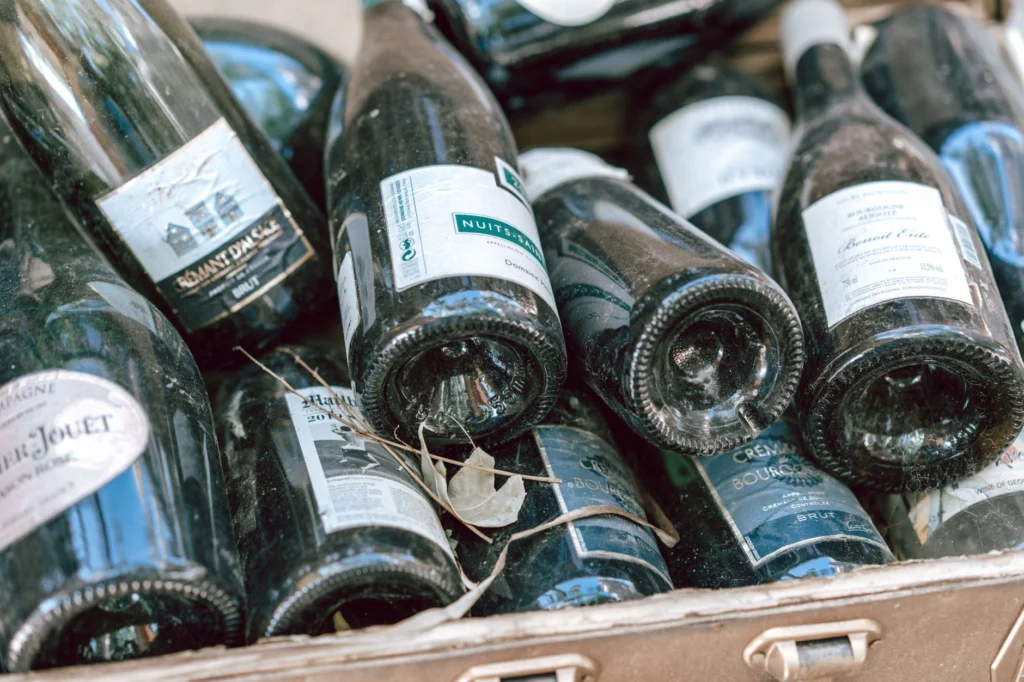
- Burgundy bottle: Sloping shoulders and a wider body. Typical diameter is about 80 to 85 mm (3.15 to 3.35 inches). Common for Pinot Noir and Chardonnay.
- Alsace, German, or Hock bottle: Tall and slender with little shoulder. Body diameter is usually about 70 to 75 mm, similar to Bordeaux, but the bottle is taller.
- Champagne and sparkling wine bottle: Thicker glass to hold pressure. Body diameter is often about 80 to 85 mm, with heavier construction than still wine bottles.
Practical Effects of Diameter
Storage and shipping
Standard diameters let racks, cases, and pallets be designed around predictable footprints. A 75 mm bottle and an 85 mm bottle do not pack the same way. For a cellar, the difference can determine whether a rack holds six bottles across or fewer. For a distributor, it affects case counts and freight efficiency.
Cork fit and sealing
The critical measurement for closure is the internal neck diameter, not the body diameter. Natural cork, technical cork, and screwcap finishes are specified to tight tolerances. If the neck finish is out of specification, the closure may leak or oxidize the wine. Body diameter matters mainly because it is part of the same molded bottle and production run.
Bottling line efficiency
Filling, corking, labeling, and case packing equipment is set up for specific bottle dimensions. Consistent diameters keep those machines running at speed. Custom bottles can require adjustments, new tooling, or slower line speeds, which raises cost.
Shelf presence
A wider Burgundy-style bottle can look more generous than a narrow Bordeaux-style bottle, even when both hold 750 ml. Producers use that visual difference deliberately. A heavy sparkling bottle signals pressure and celebration; a slender Hock bottle signals a different tradition. The diameter is part of that signal, but it does not change the volume.
Custom Diameters and Tradeoffs
Some producers use custom molds to stand out. The tradeoffs are concrete: custom glass molds cost more, standard cases and racks may not fit, and irregular shapes can waste space in storage and transport. Most wineries stay within standard families because the savings in packaging and logistics are larger than the marketing benefit of a novel shape.
What to Remember
Wine bottle diameter is a packaging specification with real consequences. It influences how bottles pack, how closures fit, how fast a bottling line runs, and how a wine looks on shelf. The common ranges are about 70 to 75 mm for Bordeaux and Hock styles and about 80 to 85 mm for Burgundy and Champagne styles. Those numbers are guidelines, not laws, but they explain much of the consistency in wine packaging.
If your company or product is mentioned in this article, you're welcome to share it.