For most of robotics history, the economics only worked in one setting: a fixed industrial robot arm, bolted to a factory floor, doing the same repetitive motion thousands of times a day in a tightly controlled environment. That’s why “robot” meant “car-assembly-line arm” for most of the public’s lifetime. What’s changed recently is that a combination of cheaper sensors, better battery density, and AI models that can handle the unpredictability of the real world has made mobile and general-purpose robots economically viable outside that narrow, controlled setting for the first time.
Warehouses got there first
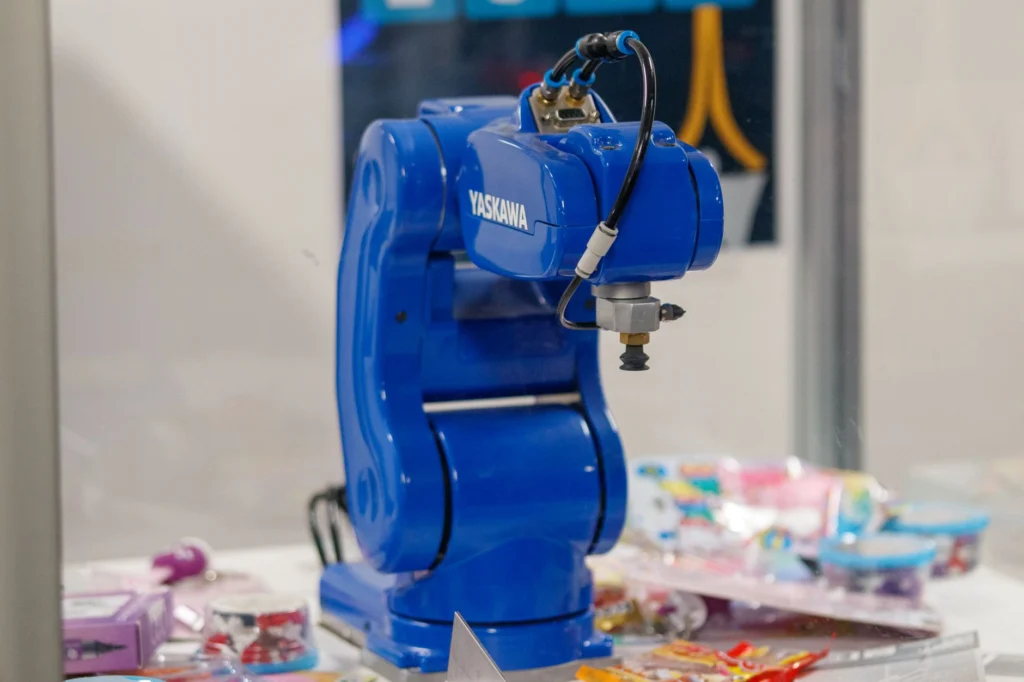
Warehouse and logistics automation is the furthest along, for an obvious reason: a warehouse is a semi-controlled environment — indoor, flat floors, known layouts — that’s much closer to a factory than, say, a hospital hallway or someone’s living room. Autonomous mobile robots that move inventory, and increasingly robotic arms that can pick irregular items off a shelf (a much harder problem than moving a pallet, because it requires visual recognition and delicate manipulation of objects the robot has never seen before), have gone from research demos to deployed infrastructure at major logistics operators over the past several years.
Humanoid robots — the general-purpose, two-legged kind that dominate the demo videos — remain earlier stage commercially, but the trajectory is real: several companies have moved from lab prototypes to limited pilot deployments in warehouses and manufacturing, doing tasks like loading trucks or basic material handling, specifically because a humanoid form factor can use the same tools, doorways, and infrastructure built for humans without requiring a whole facility redesign.
Where it’s genuinely further away
Robots that work reliably in homes or unstructured public spaces are a meaningfully harder problem, and the honest state of the field is: further away than the demo videos suggest. A robot that can fold laundry or navigate a cluttered home reliably has to handle far more unpredictability than one following known paths in a warehouse, and the failure cases (a robot near a child, a pet, an elderly person) carry much higher stakes than a dropped box.
The realistic near-term picture isn’t robots replacing broad categories of human labor overnight. It’s robots taking over the specific tasks within jobs that are physically repetitive, predictable, and either dangerous or ergonomically damaging for humans to do repeatedly — while the tasks requiring adaptability, fine judgment, or working safely around unpredictable humans stay human for considerably longer than the more breathless coverage suggests.
If your company or product is mentioned in this article, you're welcome to share it.