Range anxiety used to be the biggest objection to going electric. In 2026, the bigger complaint has shifted to charging friction, incompatible plugs, slow public chargers, and tangled cables at home. This year’s real launches, from automakers and accessory makers alike, target that friction directly rather than chasing bigger battery numbers. We looked at what’s actually shipping in 2026, separated genuine infrastructure advances from marketing noise, and ranked the nine most significant.
How EV charging got this complicated
Early EV adoption optimized almost entirely for range, manufacturers competed on miles per charge because that was the number buyers understood and feared running out of. That race produced genuinely impressive battery improvements, but it left charging infrastructure and plug standardization as an afterthought. The result was a fragmented landscape: Tesla’s proprietary connector, the competing CCS standard used by most other automakers, and a patchwork of charging networks that didn’t talk to each other. The industry’s 2025 and 2026 shift toward NACS, Tesla’s connector, as a broader standard is a direct response to that fragmentation, and most of this year’s genuinely useful launches are solving compatibility and speed problems the range-focused era left behind.
Who each pick is actually for
If you own a non-Tesla EV and regularly drive near Tesla’s Supercharger network, the adapter and Plug and Charge entries matter most to you directly. If you charge primarily at home, cable management and charger speed matter more than network compatibility. If you’re shopping for a new EV specifically and cross-shopping on charging capability, the vehicle-level entries on this list show where the real technical ceiling currently sits.
How we picked and ranked these nine
We prioritized technology actually shipping or confirmed for 2026 rather than concepts, genuine infrastructure or convenience improvements over incremental speed bumps, and a mix of vehicle-level innovation and real purchasable accessories rather than only one or the other.
1. NACS to CCS and J1772 charging adapters
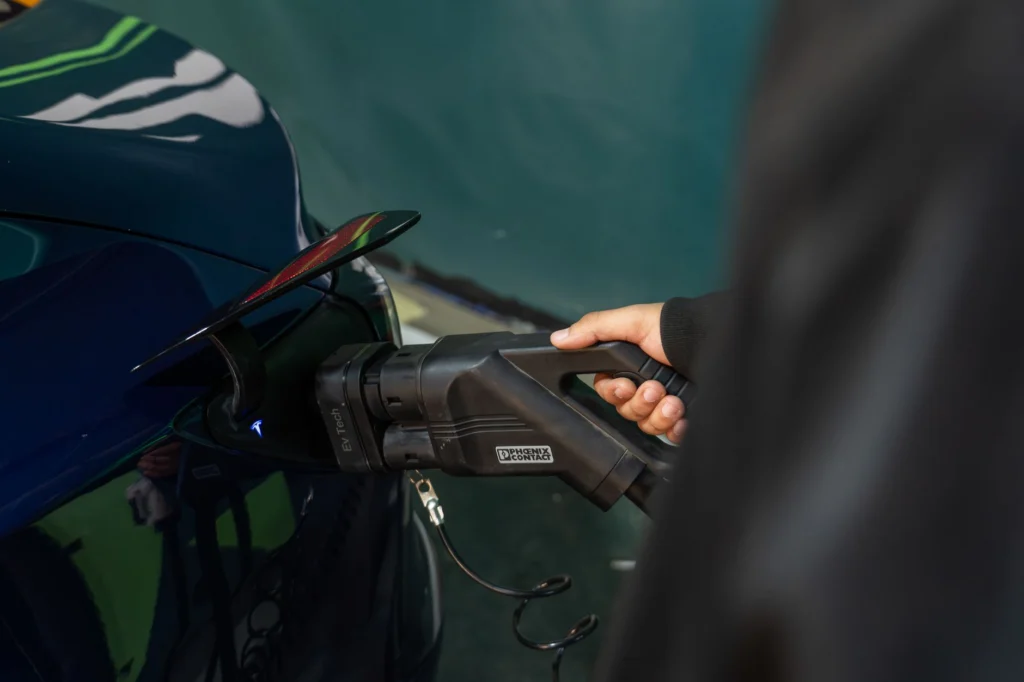
This tops the list because it solves the single most common real-world frustration EV owners report: being physically near a charger their car can’t plug into. With major automakers announcing the switch to NACS, Tesla’s connector, these adapters let non-Tesla EVs use Tesla’s extensive Supercharger network and vice versa, immediately expanding usable charging options for a huge share of existing EV owners without requiring a new vehicle.
2. Kia Plug and Charge technology
Rolling out on the 2025 EV6 and 2026 EV9, this feature automates charging initiation entirely, the car and charger authenticate and begin charging automatically without the driver tapping an app or swiping a card. It earns a high ranking because it removes friction at the exact moment EV charging is most annoying, standing at a charger fumbling with an app while other drivers wait.
3. WiTricity Halo wireless charging system
A genuinely significant infrastructure shift rather than an incremental accessory: a charging pad embedded in the ground transmits energy via electromagnetic induction to a receiver coil on the underside of the car, with no physical cable at all. WiTricity is rolling this out for real-world use in 2026, and it represents the first serious mainstream push toward charging that requires no plugging in whatsoever.
4. Porsche Cayenne Electric wireless charging pad
The first production car to offer wireless charging support directly, with an available weatherproof charging pad. Pairing a production vehicle with wireless charging support, rather than wireless charging existing only as aftermarket infrastructure, is the detail that makes this a genuine milestone rather than a concept demo.
5. ChargePoint’s 10-minute charging solution
ChargePoint’s planned 10-minute charging solution targets the charging stop duration that most directly determines whether long-distance EV travel feels comparable to a gas stop or meaningfully slower. Shrinking a charging stop toward the length of a typical gas station break addresses the exact comparison point skeptical buyers raise most often.
6. Zeekr’s 1.2 megawatt liquid-cooled charger
China’s Zeekr, part of Geely, unveiled the highest-powered car charger built to date for passenger vehicles. A charger at this power level matters less for typical daily use and more as a signal of where maximum charging speed technology is actually headed, relevant for anyone tracking how fast ultra-rapid charging could realistically get in the next few years.
7. BMW iX3
Offering over 400 miles of range alongside 400-kilowatt fast charging, the iX3 pairs two numbers that rarely appear together at this level: genuinely long range and genuinely fast charging. Many EVs optimize for one at the expense of the other, making this combination a meaningful benchmark for the rest of the segment.
8. USB charger hubs for Tesla models
A smaller, purely practical accessory: four-port fast charging hubs with retractable cables designed specifically for Tesla’s interior layout. It’s on this list because cable management is a real, persistent daily annoyance in EVs with multiple devices to charge, and this category has matured enough in 2026 to offer genuinely well-designed, vehicle-specific solutions rather than generic aftermarket clutter.
9. Cable management accessories
The broader cable management accessory category, now valued at over 1.1 billion dollars, rounds out the list because it addresses the most mundane but universally shared EV ownership complaint: tangled, dirty, or damaged charging cables at home. It’s the least glamorous entry here, and also the one nearly every EV owner, regardless of brand or model, actually benefits from.
Why availability varies so much by region
Not every entry on this list is available everywhere, and that’s worth being upfront about rather than implying global availability where it doesn’t exist. Zeekr’s 1.2 megawatt charger is a China-market development tied to Geely’s domestic charging network buildout, not something most buyers outside that market can access yet. NACS adoption and Tesla Supercharger compatibility is further along in North America than in many other regions, where CCS remains more dominant without the same automaker-driven push toward a single standard. Wireless charging infrastructure, both WiTricity’s Halo system and Porsche’s factory option, remains limited to specific launch markets rather than broad availability. Before assuming any of these technologies apply to your specific situation, it’s worth checking regional rollout status directly, since EV charging infrastructure remains one of the more geographically fragmented parts of the broader EV transition.
What this means for buyers cross-shopping EVs right now
For anyone actively shopping for a new EV in 2026 rather than retrofitting an existing one, charging capability deserves the same scrutiny range numbers got five years ago. A vehicle with strong range but mediocre charging speed, or one locked into a less-supported plug standard in your specific region, can meaningfully change the real-world ownership experience even if the spec sheet looks competitive on paper. The BMW iX3’s combination of long range and genuinely fast charging is a useful benchmark precisely because it shows both numbers can coexist, which wasn’t reliably true even two or three years ago.
Myths versus facts about 2026 EV charging technology
Myth: all EVs can now use any charging network interchangeably. Fact: compatibility is improving through NACS adoption and new adapters, but full interoperability across every network and vehicle combination still isn’t universal in 2026, which is exactly why the adapter category remains one of the most purchased accessories.
Myth: wireless EV charging is still just a concept, not something you can actually use. Fact: both WiTricity’s Halo system and the Porsche Cayenne Electric’s wireless charging pad are real, available 2026 technology, not demos or future announcements.
Myth: faster charging always means a more practical car for most owners. Fact: ultra-high-power chargers like Zeekr’s 1.2 megawatt unit matter more for pushing the technology ceiling than for typical daily charging, where home charging speed and cable convenience affect most owners’ experience far more often.
Frequently asked questions
Do I need a NACS adapter if I don’t own a Tesla?
If you want access to Tesla’s Supercharger network, which remains one of the largest and most reliable fast-charging networks, yes. With major automakers switching to NACS as a standard, these adapters are becoming one of the most commonly purchased EV accessories in 2026.
Is wireless EV charging actually available to buy right now?
Yes, in limited but real form. The Porsche Cayenne Electric offers a wireless charging pad directly, and WiTricity’s Halo system is rolling out for real-world use, though wireless charging infrastructure remains far less widespread than plug-in charging.
What does Plug and Charge actually eliminate for the driver?
It removes the need to manually authenticate a charging session through an app or card swipe. The vehicle and charger communicate and begin charging automatically once connected, which Kia is rolling out on its 2025 EV6 and 2026 EV9 models.
Why do charging accessories cost so much more for EVs than gas car accessories?
Fast charging requires handling significantly more power safely than a typical 12-volt gas car accessory, which drives up component and safety certification costs, particularly for anything handling DC fast charging rather than simple low-power connections.
What we left off, and why
We didn’t include basic Level 1 or Level 2 home charger units themselves on this list, despite their popularity, because they’re a mature, well-established category without a genuinely new 2026 innovation story. This list focuses specifically on what changed this year, not the baseline equipment most EV owners already have.
The bottom line
2026’s most significant EV charging developments share a common thread: they target friction, incompatible plugs, slow authentication, tangled cables, rather than chasing bigger range numbers the way the previous era of EV competition did. From NACS adapters solving today’s compatibility headaches to wireless charging pads previewing a cable-free future, these nine picks represent where EV ownership is actually getting easier, not just where the specs look impressive on paper.
If your company or product is mentioned in this article, you're welcome to share it.