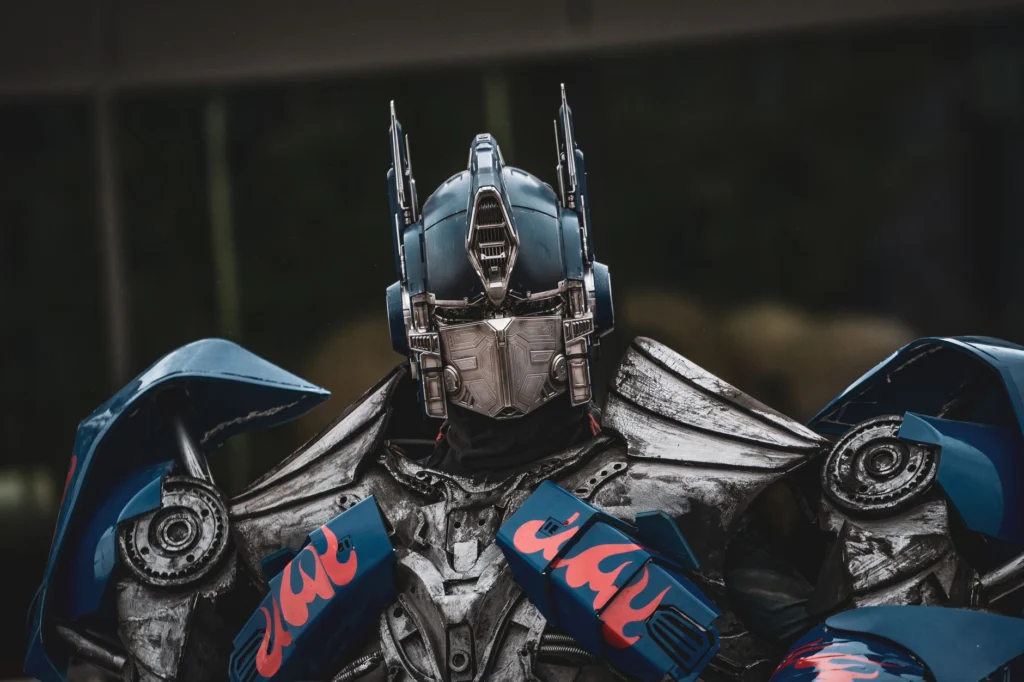
Peter Cullen, the voice actor who gave Optimus Prime his voice across nearly every version of the character for more than 40 years, died at his home in Los Angeles on August 26, 2026, at age 85. His family said he “passed away peacefully, surrounded by his loving family — and held in the hearts of his many friends and countless fans worldwide.”
Why one voice actor mattered this much to an entire franchise
It’s genuinely rare for a single performer to remain attached to one character across four decades of a franchise’s evolution — cartoons, feature films, video games, and toy lines each typically cycle through different voice talent over that span. Cullen didn’t just originate Optimus Prime’s voice in the original 1984 animated series; he returned to the role repeatedly across every major format the character appeared in since, including Michael Bay’s live-action film series, which introduced Optimus Prime to a generation of moviegoers who’d never seen the original cartoon. That continuity is the real reason Cullen’s death registers as more than a routine industry loss — for four decades, “what Optimus Prime sounds like” and “what Peter Cullen sounds like” were functionally the same fact for hundreds of millions of fans worldwide.
The real audition story behind the voice itself
Cullen’s approach to the character was reportedly shaped by a real, personal source rather than a generic “heroic robot” performance choice: he modeled Optimus Prime’s tone partly on his own older brother, a Marine, aiming for a voice that conveyed genuine command and moral authority without sounding theatrical or cartoonish. That grounded quality is widely credited as the specific reason Optimus Prime became one of animation’s most respected “father figure” characters rather than a generic action-toy mascot — a real performance choice that shaped how an entire generation of children understood what a trustworthy leader sounds like.
What happens to the character now
Cullen’s death raises a real, practical question the Transformers franchise now has to answer: who, if anyone, takes over voicing Optimus Prime going forward, and how a production team handles recasting a role this closely identified with one performer’s actual voice. Franchises have navigated this exact situation before with other beloved characters, typically either recasting with a sound-alike, digitally preserving archived vocal performances for future use, or deliberately retiring the character’s active voice work as a form of tribute — a real decision Hasbro and the franchise’s current rights holders will now have to make publicly, likely in the context of whatever Transformers projects are already in production.
The role most fans never connect to Optimus Prime at all
Here’s the real detail that surprises even longtime Transformers fans: the same voice behind Optimus Prime’s commanding, battle-ready leadership was also Eeyore, Winnie the Pooh’s gloomy, soft-spoken donkey — about as far from a heroic robot commander as a character can get. Cullen voiced Eeyore across Disney’s Winnie the Pooh franchise for years, and he’s said publicly, more than once, that Optimus and Eeyore were his two favorite roles of his entire career — a real, striking range most fans who grew up on only one of those franchises never realized came from the same performer.
The rest of a genuinely wide-ranging career
Beyond Optimus and Eeyore, Cullen voiced Monterey Jack in Disney’s Chip ‘n Dale Rescue Rangers, Venger in the animated Dungeons & Dragons series, and KARR — the evil counterpart to KITT — in Knight Rider. He also provided the vocal effects for the creature in the original 1987 Predator film, a real, uncredited-feeling contribution most audiences never associate with a voice actor at all. Beyond character work, he narrated the read-along storybook versions of the original Star Wars trilogy and spent years as the on-air announcer for Cartoon Network’s Toonami block — real, sustained work across formats (film, television, home video, network branding) that most single-character-defined performers never get the chance to build.
Why that breadth actually matters to how he should be remembered
Reducing Cullen’s career to “the Optimus Prime guy,” while understandable given the character’s cultural footprint, genuinely undersells a performer who built sustained relevance across four decades and a real range from a gloomy children’s-book donkey to a battle-hardened robot commander to a menacing movie monster’s vocal effects — the kind of range an industry rarely rewards with this much visible longevity, and exactly what made him irreplaceable in more than one franchise at once.
If your company or product is mentioned in this article, you're welcome to share it.