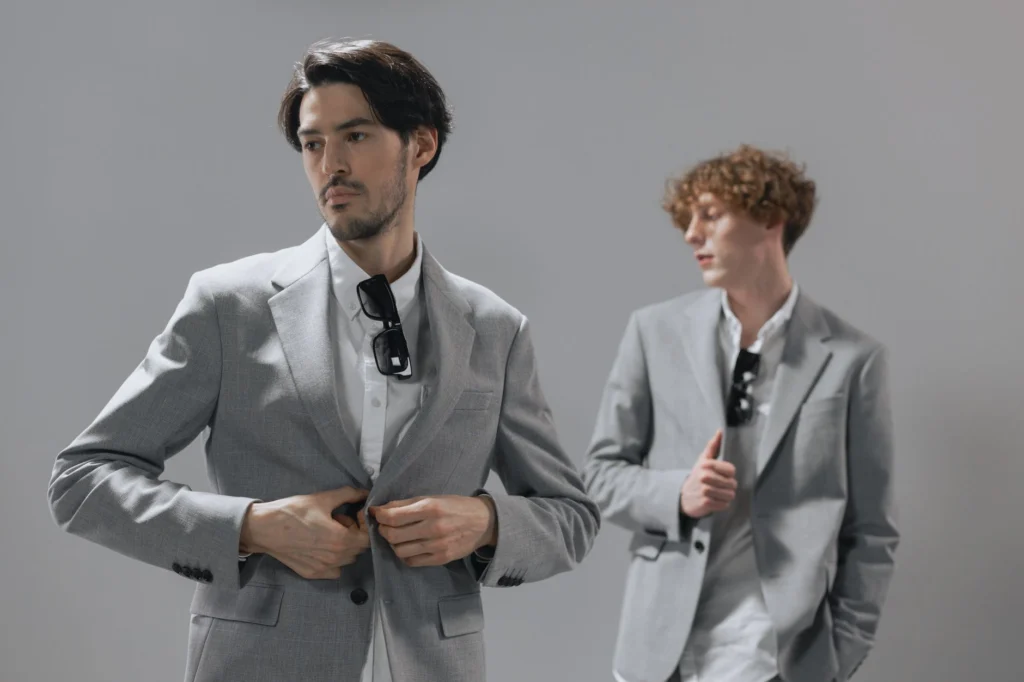
The suit’s decline as the default professional uniform for men predates the remote-work shift most casually attribute it to, and reflects a longer, more structural change in what different industries and workplace cultures actually expect from professional dress, rather than a single pandemic-driven casualization moment.
The shift began with the tech industry, not remote work
The technology industry’s deliberate rejection of formal business attire — a cultural stance dating back decades to an era when tech leaders explicitly positioned casual dress as a signal of substance over performative formality — predates remote work by a long margin, and as the tech sector’s cultural and economic influence grew relative to more traditionally formal industries like finance and law, its dress norms gradually became more broadly aspirational and acceptable across other white-collar industries that had previously held firmly to formal dress expectations.
What replaced the suit wasn’t simple casualization
The category that’s genuinely grown to fill the space the suit once occupied isn’t purely casual clothing — it’s a distinct “smart casual” or “elevated basics” category: well-fitted, higher-quality versions of fundamentally casual garments (structured knitwear, well-tailored chinos, quality leather footwear) that signal the same underlying values a suit once communicated — attention to quality, fit, and presentation — without the suit’s specific formal signaling. This distinction matters: the shift isn’t really evidence that professional appearance stopped mattering, it’s evidence that the specific garment communicating professionalism changed.
The suit didn’t lose to casual clothing broadly. It lost to a new, more specific category that signals the same underlying values through entirely different garments.
Where the suit genuinely remains the expected standard
Certain industries and contexts — client-facing finance and law roles, formal ceremonial occasions, specific traditional or diplomatic contexts — have retained the suit as a genuinely unambiguous expectation with little sign of the broader trend eroding it, which is worth understanding as a real, durable exception rather than evidence the broader casualization trend is temporary or reversing; the pattern is closer to increasing bifurcation by industry and context than a uniform decline across all professional settings.
If your company or product is mentioned in this article, you're welcome to share it.