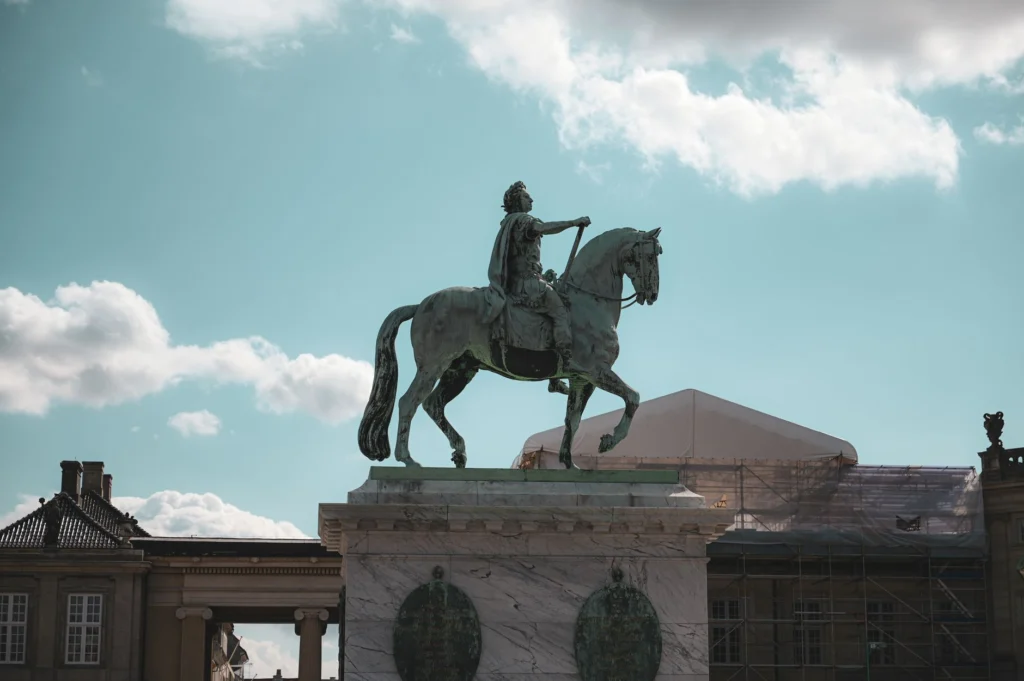
King Harald V of Norway died on August 28, 2026, at Rikshospitalet in Oslo, at age 89 — passing peacefully at 06:35 local time after a real, documented health decline through 2026. His death ends a 35-year reign that began January 17, 1991, and hands the throne to his son, Crown Prince Haakon, who is widely expected to take the regnal name King Haakon VIII, with his wife Mette-Marit becoming queen.
A reign that began with a genuinely rare distinction
Harald was born February 21, 1937, the third child and only son of King Olav V and Princess Märtha of Sweden. He held a real, notable place in Norwegian royal history from the moment he took the throne: he was the first Norwegian monarch actually born on Norwegian soil since Olav IV in 1367 — a gap of nearly 600 years, since the country’s subsequent monarchs for centuries were born abroad during periods of union with Denmark and Sweden. That fact alone made his coronation a genuinely symbolic moment for Norwegian national identity, not just a routine succession.
A childhood shaped by war, and a marriage that broke real royal convention
Harald’s early life was marked by real historical upheaval: when Germany occupied Norway in 1940, the royal family went into exile, and young Harald spent part of his childhood in Sweden and the United States before the family could return home. He became crown prince in 1957, when his grandfather King Haakon VII died and his father ascended as Olav V.
In 1968, Harald married Sonja Haraldsen — a real, genuinely controversial decision at the time, since Haraldsen was a commoner, not the aristocratic or royal-blood match Norwegian tradition expected for a future king. Harald reportedly waited years and pushed against real institutional resistance to marry her, and the marriage that once threatened controversy became, by the time of his death, simply an accepted and long-settled part of the modern Norwegian monarchy’s story.
An Olympic sailor who became Europe’s oldest reigning monarch
Harald was a genuinely serious athlete, not a ceremonial one — he represented Norway in sailing at three consecutive Olympic Games, in 1964, 1968, and 1972, and later became patron of World Sailing, the sport’s international governing body. That real athletic history stayed part of his public identity throughout his reign, distinct from the purely ceremonial image many hereditary monarchs carry.
By 2024, Harald had become Norway’s oldest-ever reigning monarch, surpassing his own father’s record. Following the death of Britain’s Queen Elizabeth II in 2022, he also held the real distinction of being Europe’s oldest reigning monarch for the final years of his life.
The real health decline that preceded his death
2026 brought a documented series of health crises. Harald was hospitalized in February after suffering dehydration and an infection while on holiday in Tenerife with Queen Sonja. His condition worsened again in mid-August: he was hospitalized on August 17 after developing fluid accumulation in the body, a real, documented side effect of cortisone treatment he was receiving for hemolytic anemia. Norwegian palace officials described his condition as “very serious” and later “extremely serious” in the days before his death, while Queen Sonja and Crown Prince Haakon — acting as regent during his father’s illness — cancelled all royal engagements to be with him.
What happens next for the Norwegian monarchy
Crown Prince Haakon, 53, becomes Norway’s fourth king since the country gained full independence from Sweden in 1905. He is widely expected to keep his own name as regnal title, following the pattern his grandfather Olav V and great-grandfather Haakon VII set before him — meaning he will most likely be known as King Haakon VIII. His wife, Crown Princess Mette-Marit, also 53, becomes queen.
The honest takeaway
Harald V’s 35-year reign carried genuine historical weight beyond its length: a king born on Norwegian soil after a nearly six-century gap, a marriage that quietly reshaped what was acceptable for a Norwegian royal match, real Olympic-level athletic credentials, and by the end of his life, the distinction of being the longest-continuously-reigning monarch in Europe. A February 2026 poll found he remained the royal family member Norwegians felt best represented the monarchy, scoring 9.2 out of 10 — a genuinely strong public standing to carry into a succession his son now inherits.