For most of the last century, malaria vaccines were a research goal that kept not quite arriving — decades of trials producing candidates that were either too expensive to manufacture at scale, or not protective enough to justify the cost of a rollout. R21/Matrix-M, developed at Oxford and manufactured by the Serum Institute of India, is the vaccine that’s actually changed that math, and it’s now moved past the trial stage into routine childhood immunization programs in roughly two dozen countries. The question worth asking isn’t whether it exists — it’s whether it’s doing what the trials said it would.
What the original trials actually found
In Phase 3 trials, R21/Matrix-M showed efficacy of about 72 percent at sites with strongly seasonal malaria transmission, and about 67 percent at sites where the disease is present year-round. Those aren’t headline near-total-protection numbers, and it’s worth being precise about that — a vaccine that prevents roughly two-thirds to three-quarters of cases is genuinely valuable at population scale, but it’s not the same claim as eliminating the disease in a vaccinated child.
A booster dose given twelve months after the initial series held efficacy at around 80 percent over the following year in some trial populations, and at about 78 percent against multiple malaria episodes over two years — figures that matter because malaria isn’t a single-exposure illness in high-transmission regions; children in the hardest-hit areas can be reinfected repeatedly in a single season, and protection has to hold up across many exposures, not just one.
What changed to make rollout possible
The more understated part of the R21 story is manufacturing capacity, and it’s arguably the more consequential one. The prior WHO-recommended malaria vaccine, RTS,S, was capped at around 4 million doses annually as of 2023 — nowhere near enough for the scale of need across sub-Saharan Africa, where the large majority of the world’s malaria deaths occur, disproportionately among children under five. R21/Matrix-M was designed with production capacity for up to 200 million doses a year, a fifty-fold difference that changes the conversation from which children get access to something closer to how fast can distribution actually keep up.
What real-world monitoring has found since rollout
Trial results and real-world results don’t always match — a vaccine tested in a controlled trial population doesn’t automatically perform identically once it’s distributed through actual health systems, with all the variation in storage conditions, dosing schedules, and follow-up that implies. That’s exactly why post-rollout monitoring matters, and it’s the part of this story still actively being written: reporting from real-world effectiveness studies has so far found the vaccine performing in line with what the clinical trials predicted, rather than falling short of it — a genuinely reassuring, if less dramatic, finding.
The harder ongoing problem isn’t the vaccine’s biology — it’s data infrastructure. Public health researchers have specifically flagged that reliable, individual-level vaccination records remain difficult to maintain across many of the countries where R21 is being deployed, which makes rigorous effectiveness tracking harder than it should be. Strengthening electronic immunization registries has been identified as a genuine priority, not a bureaucratic footnote — without it, distinguishing a vaccine that underperformed from a case where health workers simply lost track of who actually got vaccinated and when becomes much harder.
The honest summary
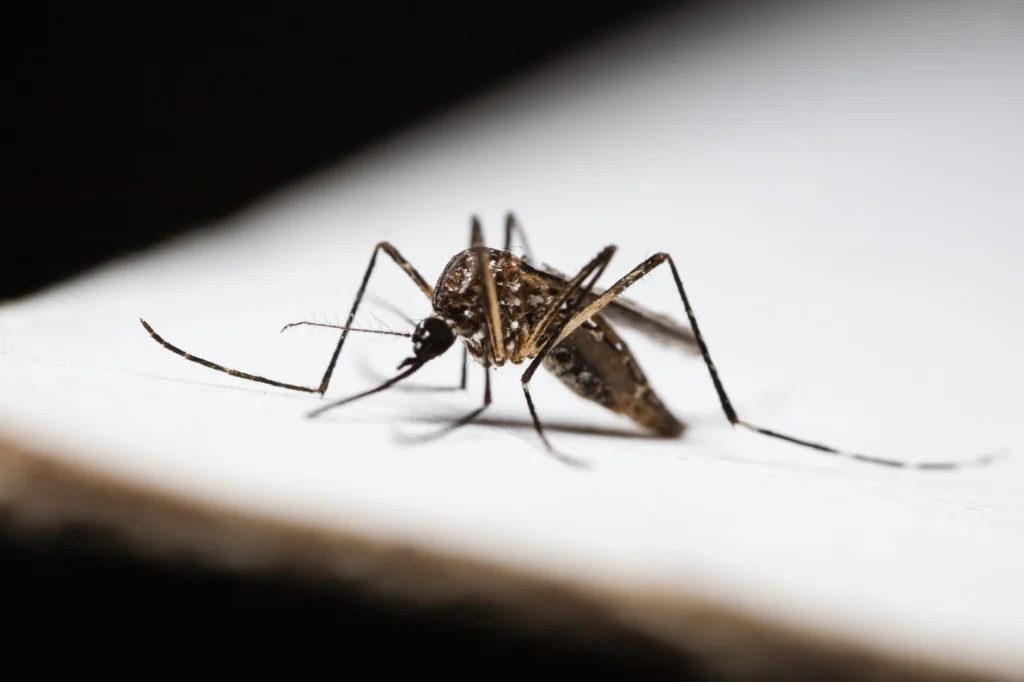
R21/Matrix-M is a real, meaningfully effective vaccine, backed by manufacturing capacity that finally matches the actual scale of need, and early real-world data is consistent with — not worse than — what the trials predicted. It is not a cure, and public health officials haven’t framed it as one; malaria prevention still depends on bed nets, mosquito control, and treatment access alongside vaccination, not vaccination alone. The most useful way to think about R21 isn’t as the end of the malaria story, but as the first tool in that story that’s actually been manufactured at the scale the problem requires.