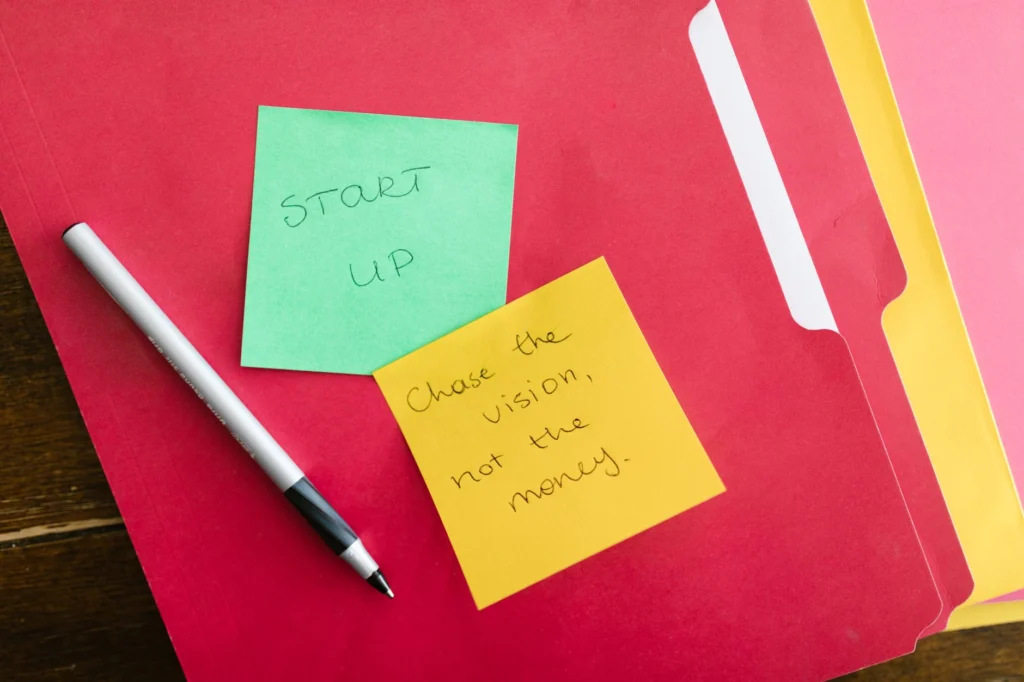
Most “start a business with no money” content sells a fantasy: quit your job, follow your passion, the money will follow. The realistic version is less exciting and considerably more useful — a business with zero starting capital works through a specific, disciplined sequence, and skipping steps in that sequence is the actual reason most zero-capital attempts fail, not a lack of a good idea.
Start with what you can sell this week, not what you eventually want to build
The single most important discipline in starting with no money is resisting the urge to build infrastructure before you have a paying customer. Freelancing, micro-consulting, and service-based businesses are the realistic starting point specifically because they let you begin with only a laptop, a phone, and a genuinely clear offer — no inventory, no manufacturing, no upfront cash outlay required before the first sale. A business genuinely starts the moment someone pays you for something, not when you’ve built a polished website, designed a logo, or incorporated an LLC. Identify a real problem you can solve immediately, validate that someone will actually pay for the solution, deliver it, and only then reinvest the proceeds into whatever comes next.
The free-tool landscape has genuinely changed what’s possible
A meaningful, concrete shift has happened in the last several years that makes zero-capital starts more realistic than they were a decade ago: software that once cost real money now routinely offers robust free tiers. Project management tools like Trello and Asana, communication tools like Slack, design tools like Canva, and website builders like WordPress and Wix all offer genuinely usable free starting points — not crippled trial versions, but functional tools real early-stage businesses actually run on. That matters specifically because it removes what used to be a real, unavoidable startup cost: the basic operational software layer a business needs just to function day to day.
The earn-reinvest cycle is the actual engine, not a slogan
The mechanical core of bootstrapping from zero is genuinely simple to state and genuinely hard to execute with discipline: earn, reinvest, repeat. Keep fixed costs as close to zero as possible, get to your first paying customer as fast as you can, and then plow the resulting revenue directly back into whatever specifically drives more revenue — better tools, targeted marketing, contracted help for the parts of the business you can’t personally scale. Early-stage businesses following this model typically reinvest aggressively: 50% to 80% of revenue going straight back into the business isn’t unusual, and isn’t a sign of struggling — it’s the actual mechanism by which a zero-capital start becomes a funded one, without ever taking on outside investment or debt.
Stay lean longer than feels comfortable
The specific discipline that separates founders who successfully bootstrap from zero capital from those who run out of runway isn’t a better idea — it’s a genuinely stricter relationship with spending. That means avoiding full-time hires and major financial commitments until revenue clearly, demonstrably supports them, and defaulting to contractors or part-time help over salaried employees for as long as the business can reasonably operate that way. It also means being ruthless about cutting any activity that doesn’t lead directly to a paying client or a completed sale — a genuinely uncomfortable discipline, because it means saying no to activities that feel productive (networking events, content that doesn’t convert, planning meetings) in favor of activities that are actually, measurably productive.
How to know when it’s actually time to spend money
Staying at zero capital forever isn’t the goal — knowing specifically when reinvesting real revenue into real spending actually makes sense is just as important as the discipline to avoid spending too early. The signal worth watching for isn’t a calendar date or an arbitrary revenue milestone; it’s a specific, repeated pattern: you’re consistently turning away paying work, or consistently unable to deliver at the quality level that earned you the client in the first place, purely because of your own limited hours. That’s the point where reinvesting revenue into a contractor, a paid tool that saves meaningful time, or modest paid customer acquisition genuinely pays for itself, because it’s removing a real, demonstrated bottleneck — not a hopeful bet on growth that hasn’t shown up yet. Spending ahead of that specific signal is exactly the pattern that turns a disciplined zero-capital start into a business that runs out of runway before it ever needed to.
What this actually looks like in practice
A realistic zero-capital sequence looks specific and unglamorous: pick a service you can deliver with skills you already have, find one person willing to pay for it this week, deliver it well enough that they’d refer you to someone else, and use that first payment to fund the next small improvement — a better invoicing tool, a slightly better website, an hour of contracted help on something outside your own skill set. That’s a genuinely different, slower, more deliberate process than the “quit your job and build your dream” framing most content in this space leans on, and it’s also the version that actually describes how most real, still-operating small businesses were actually built.
Why “no money” doesn’t actually mean “no risk”
A genuinely important distinction most zero-capital content skips: no starting cash doesn’t mean no real risk involved in the attempt. The actual cost of a zero-capital start is time — hours that could otherwise have gone toward a paycheck, further education, or rest — and that cost is real even when no cash left your bank account. Being honest about this upfront matters specifically because it changes the standard you should hold the effort to: giving a zero-capital business idea a genuinely fair, disciplined test for a defined period (a specific number of weeks or months, decided in advance) and then honestly evaluating the real results against that timeline is a meaningfully healthier approach than either an open-ended, indefinite commitment or an unrealistic expectation of overnight success.
The three business models that actually work at zero capital, and the ones that don’t
Not every business idea is realistically startable with zero money, and being honest about that distinction upfront saves real wasted effort. Service-based businesses — consulting, freelance skilled work, done-for-you agency services — are genuinely zero-capital-compatible because the entire cost of delivery is your own time and existing expertise. Digital products and content-based businesses sit close behind, requiring only free or near-free tools to produce and distribute. What doesn’t realistically work at true zero capital: anything requiring physical inventory held in advance, anything requiring specialized equipment you don’t already own, and anything requiring meaningful advertising spend just to reach a first customer. A founder with a genuinely capital-intensive idea and no money isn’t wrong to want to build it — but the realistic first move is a smaller, adjacent, zero-capital service business in the same space, used specifically to generate the cash the larger idea actually requires, rather than waiting on outside funding to skip that step entirely.
The specific first-week actions that separate a real start from a plan
The gap between “I want to start a business with no money” and an actual, operating zero-capital business usually comes down to a small number of concrete actions taken in the first week, not a longer-term strategic plan. Identify one specific service you can deliver today with skills you already have. Write down, in one sentence, exactly who has this problem and why they’d pay to solve it. Reach out directly — not through a polished marketing funnel, but a direct message or conversation — to five people who might genuinely be in that situation. Close one paying client, even at a modest rate, before spending a single hour on a logo, a business name, or a website. That sequence feels underwhelming compared to a bigger vision, and that’s precisely the point: a real, if small, paying relationship is worth more at this stage than any amount of unvalidated planning.
The honest tradeoff nobody sells you upfront
Bootstrapping from zero capital is genuinely slower than starting with outside funding, and it’s worth being direct about that tradeoff rather than pretending it doesn’t exist. A funded competitor can outspend you on marketing, hire faster, and absorb early losses your zero-capital business structurally can’t. What zero-capital starting does give you, in exchange for that slower pace, is complete ownership, no investor timeline forcing premature scaling decisions, and a business built on genuinely validated demand from day one — since nobody pays for something that doesn’t actually solve their problem, and a zero-capital business has no cushion to hide behind if the offer isn’t real.
The actual takeaway
Starting a business with no money isn’t a hack or a workaround — it’s a specific, disciplined operating model with its own real logic: sell before you build, reinvest aggressively rather than paying yourself early, stay lean past the point of comfort, and let real paying demand — not a business plan — decide what to build next. The founders who actually succeed at this aren’t the ones with the most creative idea. They’re the ones disciplined enough to get to a first real sale fast, and patient enough to let that first sale fund the next one rather than reaching for outside money to skip the wait.
If your company or product is mentioned in this article, you're welcome to share it.