Most people’s understanding of how airplanes fly traces back to a simplified explanation taught in school: air travels faster over a wing’s curved upper surface than the flatter bottom, and Bernoulli’s principle says faster-moving air has lower pressure, creating lift. It’s not wrong exactly, but it’s incomplete enough that aerodynamicists and physics educators have spent years pushing back on it as the primary explanation, because it fails to explain several basic facts about real flight — including how planes can fly upside down.
The more complete explanation
The more accurate, physics-complete explanation centers on how a wing redirects airflow downward as air passes over and under it — and by Newton’s third law, if the wing pushes air down, the air pushes the wing up with equal and opposite force. This downward deflection of air, not simply pressure differences from unequal travel distance, is the primary source of lift, and it’s why a wing’s angle of attack (the angle at which it meets oncoming air) matters enormously — a flat board angled correctly into the wind can generate real lift, which the simple “curved top surface” explanation struggles to account for.
The pressure difference explanation isn’t entirely wrong — there genuinely is lower pressure above the wing and higher pressure below, which does contribute to lift — but the popular “equal transit time” version (the specific claim that air must travel the top and bottom surfaces in the same amount of time) has been directly shown to be false: air moving over the curved top surface actually arrives at the trailing edge well before the corresponding air molecule that traveled underneath, contradicting the mechanism the popular explanation depends on.
A plane doesn’t fly because of a subtle pressure trick on a curved surface. It flies because the wing is actively shoving a large mass of air downward, every second, hard enough to hold the aircraft’s weight up in reaction.
Why this matters beyond trivia
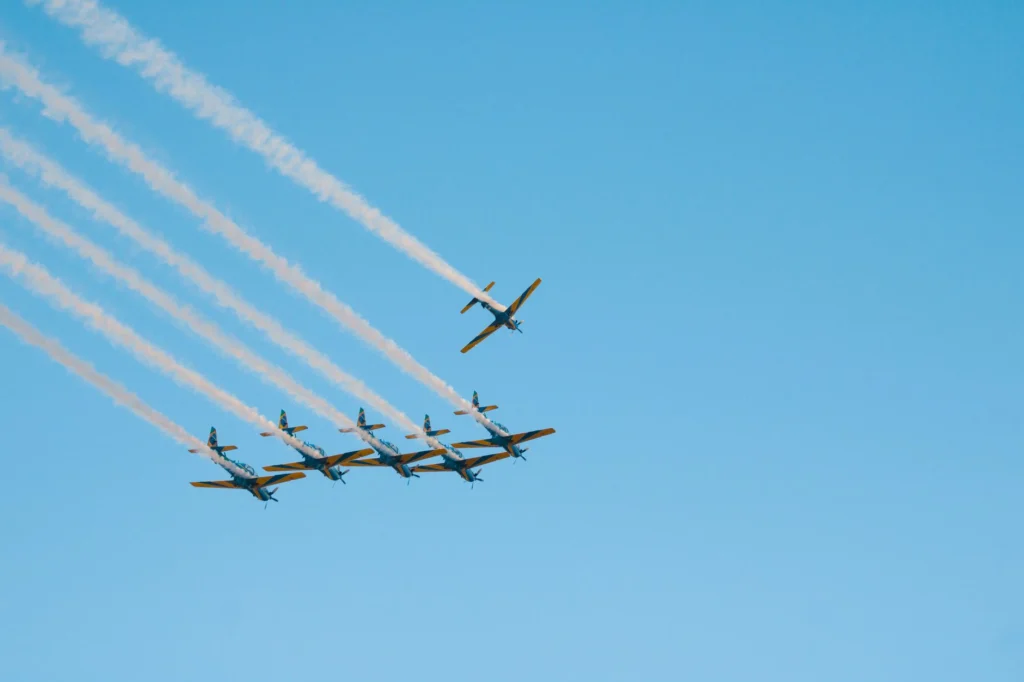
This isn’t just an academic correction — the more complete, momentum-based understanding of lift is what actually lets engineers design wings for radically different situations (aerobatic aircraft, supersonic jets, wings that work upside down during a stunt maneuver) where the simplified pressure-difference story breaks down entirely. It’s a good general reminder that the version of a scientific explanation that’s easiest to teach in a single sentence isn’t always the version that’s actually correct.
If your company or product is mentioned in this article, you're welcome to share it.