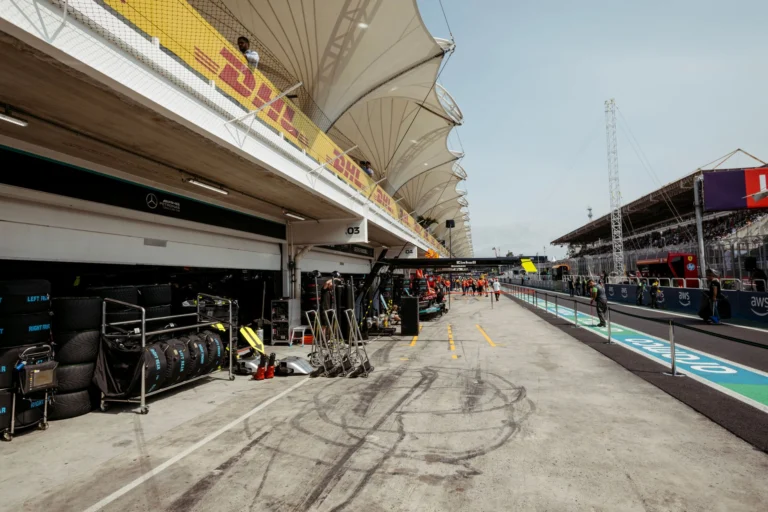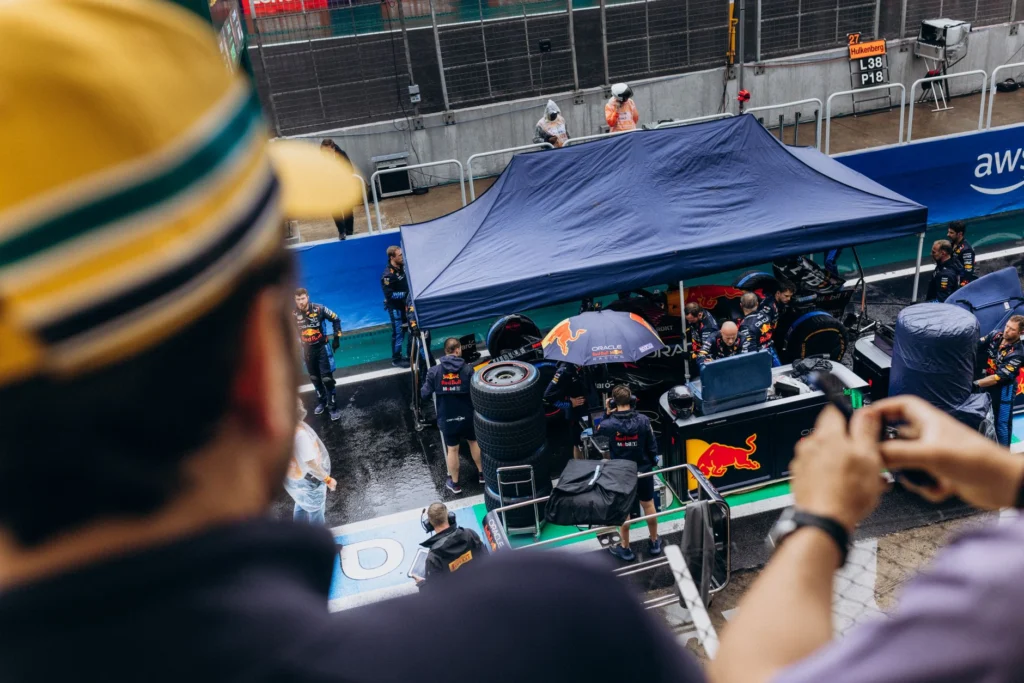
A two-second pit stop is the most visible piece of teamwork in Formula 1, and none of it belongs to an engineer. It’s built and executed by mechanics — the people who physically build, maintain and repair every car on the grid, and the largest single technical workforce most teams employ.
What an F1 mechanic actually does
F1 mechanics are split broadly into two groups: factory-based mechanics, who build and prepare the cars between race weekends, and trackside race mechanics, who travel to every Grand Prix to assemble, maintain and repair the car through practice, qualifying and the race itself — including the pit-stop crew, where each mechanic owns one specific, rehearsed job (a single wheel, the jack, the front wing) in a sequence practised until it’s close to automatic.
The job covers far more than pit stops. Race mechanics rebuild the car overnight between sessions, diagnose and fix mechanical problems under a strict curfew and parc fermé rules that limit what can be changed once qualifying starts, and manage the physical logistics of a car that has to be stripped, packed and rebuilt in a different country roughly every fortnight during the season.
The route in
This is one of the clearest non-degree routes into Formula 1. Motorsport-specific apprenticeships (Williams and McLaren both run structured mechanic apprenticeship schemes), vocational qualifications in motor vehicle or mechanical engineering, and direct experience in junior single-seater or GT racing series are all genuine, well-trodden paths — a university engineering degree is not the expectation for this role and can actually be less relevant than hands-on trade experience.
Most F1 mechanics build their CV through lower racing categories first — Formula 4, Formula 3, British Touring Cars, GT racing — proving they can work fast, accurately and calmly under time pressure before a top team will trust them with a car worth tens of millions of dollars in development cost. That progression usually matters more to a hiring team than where someone studied.
What the job is actually like
It’s one of the most physically demanding jobs in the paddock: long hours, constant travel, and race weekends that run from early setup through to a rebuild that can stretch past midnight. It’s also one of the most genuinely team-dependent roles in F1 — a pit stop is only as fast as its slowest specialist, which makes mechanics’ work unusually visible and unusually collaborative compared with engineering roles that are judged more individually.
For where this role sits within the full picture of F1 team jobs, see Formula 1 Jobs: Every Category F1 Teams Actually Hire For.