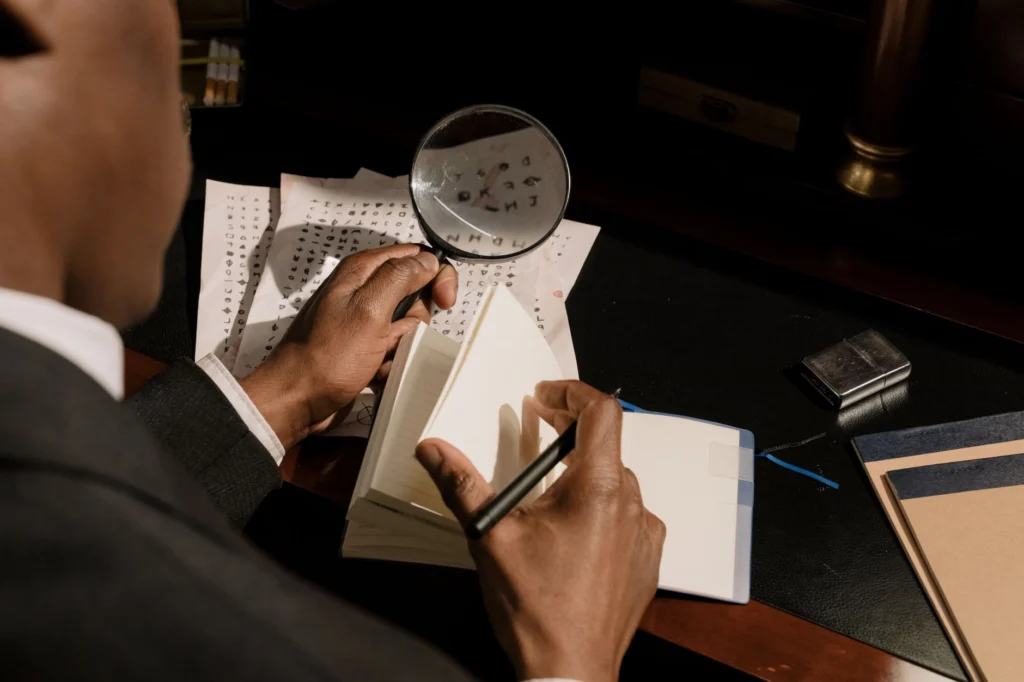
For 51 years, one of the most famous codes in American criminal history sat unsolved. The Zodiac Killer sent his 340-character cipher to a California newspaper in 1969, taunting police with a puzzle he apparently believed no one could crack. Professional cryptographers tried and failed for decades. Then, in December 2020, a small team combining a Belgian mathematician, an American software developer, and an Australian programmer finally broke it — using a mix of manual cryptanalytic technique and computational pattern-matching tools built specifically to chew through the astronomical number of possible letter substitutions faster than any human could by hand. It wasn’t magic, and it wasn’t a single AI system typing out an answer. But it was the first real, documented proof that modern computational methods could crack a cipher that had defeated the FBI, the NSA, and generations of amateur codebreakers.
That single, real success is the honest reason to ask the question seriously: what about the ciphers that are still unsolved? Not as a thought experiment — several of them are genuinely still open, still actively worked on by professional and amateur cryptographers alike, and still resistant to exactly the kind of computational brute-force that finally cracked the Zodiac’s 340 cipher. Here’s what’s actually still out there, and the real, specific technical reasons each one has resisted the same treatment.
Kryptos: the CIA’s own unsolved puzzle, sitting in its front yard
Kryptos is a sculpture, not a letter — a large, curved copper panel installed at CIA headquarters in Langley, Virginia, in November 1990, carved with more than 1,800 encrypted characters across four separate sections. The sculptor, Jim Sanborn, built it specifically as a cryptographic puzzle, and three of the four sections have been solved: the first two were cracked by CIA and NSA analysts working independently in the 1990s, and the third fell to a codebreaker’s own persistent effort not long after. The fourth section — just 97 characters, known as K4 — has now resisted every serious attempt for more than three decades, making it one of the most famous open cryptographic puzzles in the world, sitting in plain sight at the headquarters of the agency whose entire job is breaking codes.
Sanborn himself has released partial clues over the years, apparently out of genuine sympathy for the codebreaking community’s frustration — in 2010 he confirmed that a specific stretch of the ciphertext decrypts to the word “BERLIN,” and in 2014 he confirmed another stretch decrypts to “CLOCK.” Those aren’t guesses; they’re confirmed, verified plaintext fragments from the sculpture’s actual creator. And K4 is still unsolved anyway.
The reason this matters for the “could AI solve it” question is specific and technical, not just “it’s really hard.” K4 is only 97 characters long — genuinely short as ciphers go, which matters because most modern cryptanalytic and computational cracking methods, including the pattern-matching approach that helped crack the Zodiac’s longer 340-character cipher, rely heavily on statistical frequency analysis: how often certain letters or letter pairs appear, matched against known patterns in the target language. The shorter the ciphertext, the weaker that statistical signal gets, and 97 characters is short enough that classic frequency analysis alone genuinely struggles to produce reliable results, AI-assisted or not. Sanborn has also stated that the cipher deliberately deviates from a single, fully consistent method across the sculpture’s four sections, which undermines another core assumption most cracking tools depend on: that the same underlying pattern holds throughout the entire message.
The Beale Ciphers: a puzzle built around an unverifiable premise
The Beale Ciphers present an entirely different kind of problem. According to an 1885 pamphlet, a man named Thomas J. Beale buried a fortune — supposedly worth tens of millions of dollars in today’s value — somewhere in Bedford County, Virginia, in the early 1800s, then left behind three encrypted documents describing the treasure, its exact location, and the names of the people entitled to a share. One of the three ciphers has actually been solved: it uses the Declaration of Independence as its key, with each number in the cipher referring to a specific word’s position in that document, decoding to a description of the treasure itself. The other two — including, critically, the one that supposedly gives the treasure’s actual location — remain unsolved to this day, despite more than a century of dedicated effort from treasure hunters and professional cryptographers alike.
Here’s the specific problem no computational method, however powerful, can brute-force around: nobody has ever definitively proven the underlying story is even true. No independent historical record confirms Thomas Beale existed, no verification exists that any treasure was ever actually buried, and a real body of cryptographic and historical analysis has raised serious doubts that the entire pamphlet may be an elaborate 19th-century hoax. This is a genuinely different failure mode than Kryptos or the Zodiac: those are confirmed, real ciphers with a confirmed real author who built them specifically to be solved eventually. If the Beale story is fabricated, there may be no real key at all to find — no computational method, however sophisticated, can decode a message that was never actually built around a coherent, real solution in the first place. It’s the cryptographic equivalent of searching increasingly hard for an answer to a question that may not have one.
The Voynich Manuscript: real language, or an elaborate illusion of one?
The Voynich Manuscript is arguably the strangest entry on this list, because unlike a short cipher or a treasure-map puzzle, it’s an entire roughly 250-page handwritten book, carbon-dated to the early 1400s, written in a script that matches no known human language or writing system, and illustrated with images of plants that don’t correspond to any known real species. It has resisted every attempted decoding for more than a century, by cryptographers who cracked far more complex military and diplomatic codes during both World Wars.
What makes the Voynich manuscript a genuinely fascinating computational challenge is a specific, real finding from statistical linguistic analysis: the text’s word-length distribution and internal statistical patterns actually match the patterns real, meaningful human languages follow — not the kind of pattern you’d expect from purely random gibberish. That’s a real, measurable, peer-reviewed finding, not speculation. And it’s exactly why the manuscript is such a genuinely hard case for AI-driven approaches specifically: most modern language-processing systems, including the large language models capable of translating between real human languages with remarkable fluency, are built by learning statistical patterns from enormous datasets of real, known languages. The Voynich manuscript’s script doesn’t match any of them — there’s no known “Rosetta Stone” bridging its alien-looking alphabet to any language a model could have learned. An AI system can recognize that the text behaves statistically like a real language without having any actual bridge to what that language’s underlying vocabulary or grammar means, which is a fundamentally different, harder problem than translating between two known languages, or even brute-forcing a substitution cipher built on a known base language like English.
The Tamam Shud case: a cipher with no confirmed author to even ask
In December 1948, the body of an unidentified man was found on Somerset Beach in Adelaide, Australia — no wallet, no identification, and every clothing label deliberately removed. Months later, a small scrap of paper reading “Tamam Shud” — Persian for “it is finished” or “it is over” — was found sewn into a hidden pocket in his trousers, torn from the final page of a rare edition of the poetry collection The Rubaiyat of Omar Khayyam. Police eventually located the actual specific copy the page had been torn from, discarded in the back seat of a stranger’s car, and inside its back cover was a short sequence of handwritten letters that has never been decoded — along with a phone number that led, when called, to a real local nurse who reportedly denied any connection to the case.
The man himself has never been identified, despite DNA testing on exhumed remains in more recent years. And that’s the specific, unusual obstacle this case presents for any computational cracking attempt: even the Voynich Manuscript has a confirmed real author who wrote a real, complete document with presumably real intended content. The Tamam Shud cipher is a handful of scrawled letters, possibly written by an unidentified dead man under unknown circumstances, for an unknown purpose, and it’s genuinely unclear whether it’s even a formal cipher at all rather than shorthand notes, a mnemonic device, or something else entirely. Without any confirmed structure to test against, there’s no clear computational target to aim an AI system at in the first place.
The honest answer: yes for some, genuinely maybe never for others
The real, technically grounded answer to “could AI solve these” isn’t a single yes or no — it depends entirely on what kind of problem each puzzle actually is. Kryptos K4 is the strongest genuine candidate: it’s a confirmed real cipher, built by a real person with a real solution, that’s simply too short for classical statistical methods to crack reliably — which is exactly the kind of problem where more sophisticated computational search, potentially aided by newer AI pattern-recognition techniques beyond the frequency analysis that cracked the Zodiac, could plausibly still make real progress. The Voynich Manuscript is a genuinely fascinating open research question specifically because of what statistical analysis has already confirmed about it, even without a solution yet. The Beale Ciphers and the Tamam Shud case represent a structurally different, harder problem: cases where it’s not clear a solvable answer exists at all, which is the one kind of puzzle no computational method, however powerful, can force its way past.
The actual takeaway
The Zodiac cipher’s 2020 solution wasn’t proof that AI can crack any code — it was proof that a specific kind of problem (a substitution cipher, in a known language, long enough to carry a real statistical signal) was finally within reach of modern computational tools. The mysteries still standing today aren’t unsolved because nobody has tried hard enough; they’re unsolved because each one presents a genuinely different, specific obstacle that raw computational power alone doesn’t automatically overcome. That distinction — between “hasn’t been cracked yet” and “may not be crackable by this kind of method at all” — is the real, honest dividing line running through every cipher still open today.
If your company or product is mentioned in this article, you're welcome to share it.