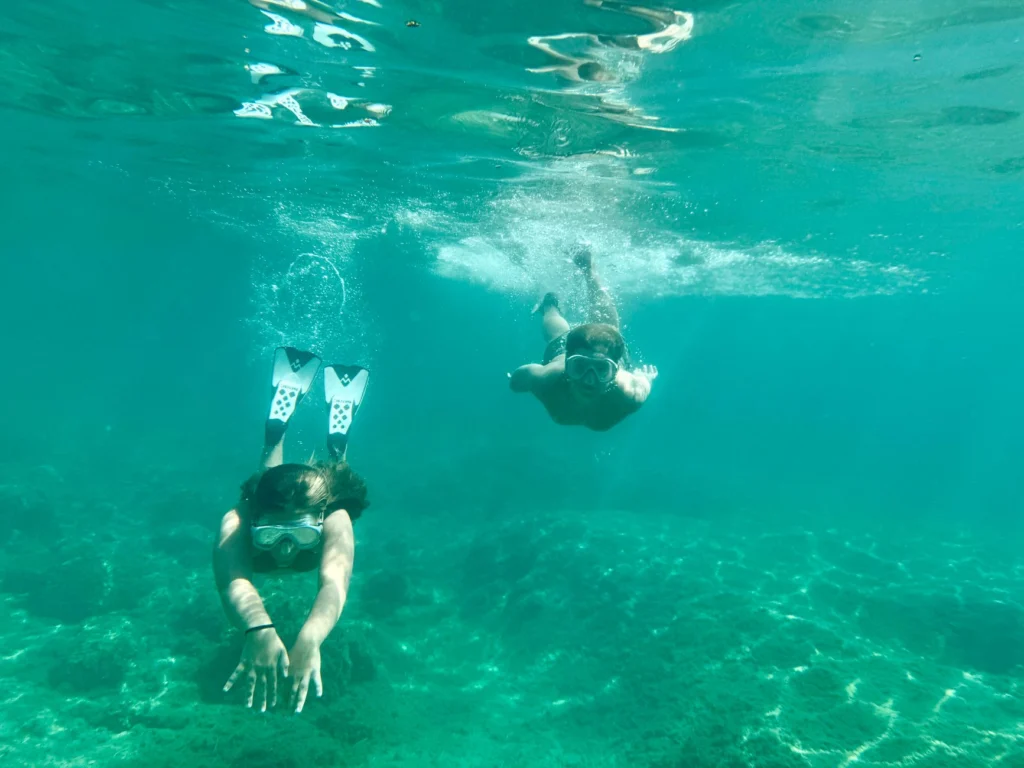
Snorkeling doesn’t require the certification, gear, or training scuba diving does — just clear water and a reason to look down. These are the real, world-class destinations that make it worth the trip.
The Great Barrier Reef, Australia
The Great Barrier Reef stretches more than 2,300 kilometers and comprises over 2,900 individual reefs and 900 islands — a scale that makes it less a single reef than an entire underwater ecosystem the size of a small country. It’s home to more than 1,500 fish species and 600 types of coral, alongside sharks, rays, and turtles, with options ranging from shallow, beginner-friendly areas to more demanding sites for experienced snorkelers.
The Maldives
Made up of 26 atolls, the Maldives offers some of the most consistently vibrant coral reefs and protected lagoons anywhere on earth, with real, frequent sightings of reef sharks and manta rays. Hanifaru Bay in Baa Atoll is a genuine standout — it hosts the largest known gatherings of manta rays on the planet, a real, documented natural phenomenon rather than marketing language.
The Red Sea, Egypt
The Red Sea’s clear water and coral-rich shallows along Egypt’s coast make it one of the rare destinations where snorkelers get nearly the same experience as divers — colorful coral within wading distance, in shallow bays genuinely protected from ocean currents, which is exactly why it’s often described as swimming inside an aquarium rather than the open ocean.
The real, current state of the Great Barrier Reef — honestly stated
It’s worth addressing directly rather than glossing over: the Great Barrier Reef has experienced real, documented stress in recent years, including its sixth mass bleaching event since 2016, with 2025 marking only the second time the reef has suffered bleaching in consecutive years. The most recent monitoring data shows a genuinely mixed picture rather than pure decline — in the latest survey period, 16% of monitored reefs saw coral cover decline, 56% showed no net change, and 28% actually increased, signaling the beginning of recovery from the 2024 bleaching event specifically. Rising ocean temperature is the documented primary driver: a rise of just one degree Celsius sustained for four weeks is enough to trigger a bleaching event. None of that makes the reef not worth visiting — its scale and biodiversity remain real and current — but it’s an honest, current picture rather than a static postcard description.
What actually separates these three from the rest
Each of these destinations earns its reputation through a real, specific structural advantage: the Great Barrier Reef’s sheer scale, the Maldives’ protected atoll lagoons and documented manta ray aggregations, and the Red Sea’s shallow, current-protected coral gardens. That’s the real pattern behind every genuinely world-class snorkeling destination — not just clear water, but a real geographic or ecological feature that concentrates marine life somewhere a snorkeler can actually reach it.
Why accessibility matters as much as marine life
What separates a genuinely great snorkeling destination from merely a biodiverse one is real, practical accessibility — reef systems teeming with life do a snorkeler no good if reaching them requires technical diving skill or a boat trip into open, current-heavy water. All three destinations above solve that problem differently but deliberately: the Maldives’ atoll lagoons are naturally sheltered from ocean swell, the Red Sea’s coral gardens sit in shallow, current-protected bays specifically because of the coastline’s geography, and the Great Barrier Reef’s outer and inner reef sections are genuinely zoned by difficulty, letting operators route beginners to calmer, shallower sections while more experienced snorkelers head further out. That deliberate accessibility, not just raw biodiversity, is the real reason these three destinations dominate global snorkeling recommendations rather than technically richer but harder-to-reach reef systems elsewhere.