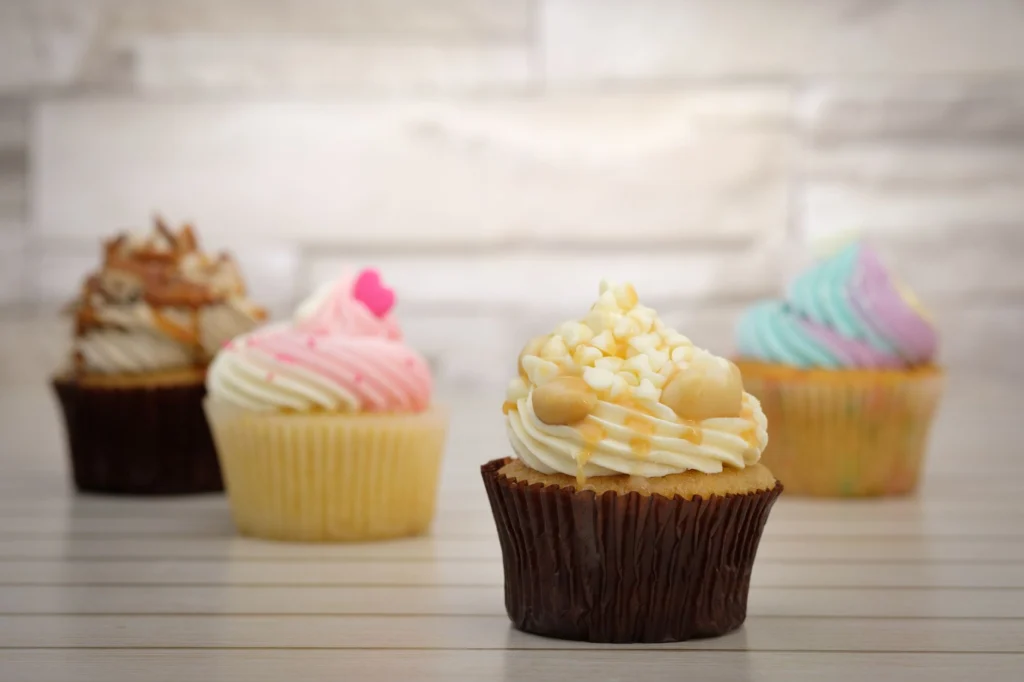
Wicked Good Cupcakes entered Shark Tank in 2013 with a deceptively simple problem: cupcakes were difficult to ship. Founders Tracey Noonan and her daughter Danielle Vilagie had started with a traditional cupcake bakery in Cohasset, Massachusetts, but customers kept asking how they could send the cupcakes to people outside the area.
Their solution was to put layers of cake, frosting, and filling into mason jars. The jar protected the dessert during shipping and gave Wicked Good Cupcakes something more valuable than another cupcake flavor: a product that could travel.
That distinction mattered. When Noonan and Vilagie appeared on Shark Tank in Season 4, they were not simply pitching cupcakes. They were pitching a way to turn a perishable bakery product into a shippable gift.
Kevin O’Leary saw the opportunity and made the only offer that survived the pitch. More than a decade later, Wicked Good Cupcakes is still selling its signature jars, but the company is no longer an independent family-run business in the same form. In 2021, it was acquired by Hickory Farms.
Wicked Good Cupcakes began with a shipping problem, not a Shark Tank pitch
Noonan and Vilagie began taking cake-decorating classes in 2010 as a mother-daughter activity. The project developed into a business, and they opened their first store in Cohasset in 2011. Customers soon wanted to send the cupcakes to friends and relatives around the country.
The obvious problem was freshness and physical damage. A conventional cupcake could be crushed, dried out, or otherwise ruined in transit.
The mason jar changed the equation. By layering the cake and frosting inside a sealed container, the company created a dessert that was much easier to package and ship. Hickory Farms later described the jars as staying fresh for up to ten days without refrigeration. (hickoryfarms.com)
The product also benefited from an unlikely publicity event. A Wicked Good Cupcakes jar was confiscated by the Transportation Security Administration after a traveler attempted to take one through airport security. The incident generated publicity for a company that was still very young. (bostonglobe.com)
By the time the founders reached Shark Tank, the business had already demonstrated that customers were willing to buy the product. The show gave them a much larger audience.
The Shark Tank deal was $75,000 for royalties, not equity
Noonan and Vilagie asked the Sharks for $75,000 in exchange for 20% of the company.
The pitch did not produce a bidding war. Several Sharks questioned the economics of the business, including its margins, shelf life, and the competitive nature of the cupcake market.
O’Leary ultimately offered a very different structure. He did not want equity. Instead, he offered the requested $75,000 in exchange for a royalty on every cupcake sold.
The final arrangement gave O’Leary $1 per cupcake until his $75,000 investment was repaid, followed by a $0.45 royalty per cupcake in perpetuity. ABC later confirmed the structure and reported that O’Leary had already received his original investment back. (abcnews.com)
That distinction is central to the Wicked Good Cupcakes story. O’Leary did not own a conventional equity stake in the company. His economic interest was tied to sales.
It was also a deal that looked more expensive as the company grew. Every additional cupcake sold after the payback period continued to generate a 45-cent payment to O’Leary.
Wicked Good Cupcakes grew sharply after Shark Tank
The exposure from Shark Tank appears to have been significant.
ABC reported that before the appearance, Wicked Good Cupcakes was generating about $15,000 in monthly sales. O’Leary said that figure had climbed to approximately $265,000 per month after the show. ABC also reported that the company had added two baking facilities and employed more than 50 people at that point. (abcnews.com)
Those numbers should be treated as a snapshot from the period rather than a current revenue figure. Wicked Good Cupcakes is privately held, and reliable current revenue figures are not publicly disclosed.
The company continued expanding its physical and production footprint. In 2013, it opened a location at Boston's Faneuil Hall, according to its own archived press and media page. (wickedgoodcupcakes.com)
Commercial Baking later reported that the company grew 600% in its first year after appearing on Shark Tank and moved into a 21,000-square-foot facility in 2017 for production, warehousing, and packaging. (commercialbaking.com)
The growth was therefore not limited to television-driven online orders. Wicked Good Cupcakes had to build the operational infrastructure required to manufacture and ship the product at a much larger scale.
Kevin O’Leary got his money back quickly and kept the royalty
The unusual royalty structure became one of the more successful Shark Tank deals from O’Leary's perspective.
In an interview with Boston Magazine in 2013, O’Leary said Wicked Good Cupcakes had already repaid his entire investment and that he continued receiving 45 cents per cupcake. (bostonmagazine.com)
That is an important detail because the original $75,000 was not the end of O’Leary's financial participation. Once the repayment threshold was reached, the royalty continued.
For the founders, the arrangement also avoided giving away equity in a family business. O’Leary specifically said he did not want an equity position because he did not want to become involved in family ownership discussions. (bostonmagazine.com)
In retrospect, the deal gave Wicked Good Cupcakes capital without changing its ownership structure in the conventional venture-capital sense, while giving O’Leary a potentially long-running revenue stream.
The company kept expanding beyond the original cupcake jar
Wicked Good Cupcakes did not remain frozen in its original Shark Tank form.
The company developed additional flavors and gifting products, and it also pursued partnerships. Its archived press page records a 2015 partnership with Cinnabon. (wickedgoodcupcakes.com)
The broader strategy increasingly fit the economics of gifting. A cupcake jar is not just a dessert; it can be packaged as a birthday present, holiday gift, thank-you gift, or corporate order.
That positioning became particularly relevant when Hickory Farms entered the picture.
Hickory Farms acquired Wicked Good Cupcakes in 2021
The biggest change in the company's history came in June 2021, when Hickory Farms announced that it had acquired Wicked Good Cupcakes. The companies did not publicly disclose the purchase price in the acquisition announcement. (hickoryfarms.com)
The acquisition made strategic sense. Hickory Farms was already built around specialty food and gifting, while Wicked Good Cupcakes brought a recognizable dessert brand and an established direct-to-consumer shipping model.
Hickory Farms said Wicked Good Cupcakes would become part of its expanding assortment of food gifts, including offerings for birthdays, Valentine's Day, Mother's Day, Father's Day, and other occasions. (hickoryfarms.com)
For Noonan and Vilagie, the transaction marked a very different stage of the business. What began as a mother-daughter bakery project had become an acquisition target for an established specialty-food company.
The sale also means that descriptions of Wicked Good Cupcakes as an independent startup are now outdated.
Where is Wicked Good Cupcakes today?
Wicked Good Cupcakes is still operating in 2026, now as part of the Hickory Farms family.
The brand continues to sell its cupcake jars through its own website and through Hickory Farms. The current product range includes classic flavors such as Chocolate Ganache and Red Velvet, seasonal varieties, gift boxes, and brownies inspired by its cupcake flavors. The company's website explicitly identifies it as part of the Hickory Farms family. (wickedgoodcupcakes.com)
Hickory Farms also currently maintains a dedicated Wicked Good Cupcakes collection, including cupcake-and-wine gifts and combinations of Wicked Good desserts with other Hickory Farms products. (hickoryfarms.com)
The brand has therefore survived the part of the Shark Tank lifecycle that eliminates many companies: the post-show surge, the operational scaling phase, and the eventual ownership transition.
There is no reliable public figure for the company's current annual revenue, and the acquisition price was not disclosed. Claims assigning a precise present-day valuation or revenue figure should therefore be treated cautiously.
Wicked Good Cupcakes' Shark Tank story ended with an acquisition, not a shutdown
The most interesting part of Wicked Good Cupcakes is not that a cupcake company got onto Shark Tank. It is that the original business problem turned out to be more durable than the television moment.
The founders needed a way to ship cupcakes without shipping ruined cupcakes. The mason jar solved that problem well enough to support a national mail-order business. Shark Tank accelerated awareness and supplied $75,000 in capital through a royalty deal. The company then built production capacity, expanded its gifting model, and eventually attracted a buyer.
In 2021, Hickory Farms acquired the company. Today, the jars remain available, the brand remains active, and the business has moved from a mother-and-daughter bakery into the portfolio of a much larger food-gifting company.
For O’Leary, the deal became a particularly unusual Shark Tank investment: his $75,000 was repaid, while his contractual 45-cent-per-cupcake royalty continued. For Wicked Good Cupcakes, the longer story is simpler. The company found a way to make a fragile product travel, and that operational insight proved more valuable than the cupcake itself.