More than 579 million PlayStation consoles and handhelds have been sold worldwide since 1994 — a run so long that the people buying a PS5 Pro today were not born when the original PlayStation launched. (TweakTown)
That history is also stranger than most people realize. PlayStation exists because Sony's first attempt to enter gaming — a joint CD-ROM add-on with Nintendo — collapsed in one of the more infamous corporate betrayals in tech history. What Sony built afterward, largely out of spite, went on to outsell nearly everything Nintendo ever made.
This is the full arc: how a failed partnership became a five-console dynasty, why the PS2 remains the best-selling game console of all time, how the PS5 Pro fits into 2026's console landscape, and what's actually known — versus rumored — about the PS6.
The PlayStation almost didn't happen — because of Nintendo
In the late 1980s, Sony and Nintendo agreed to co-develop a CD-ROM peripheral for the Super Nintendo, called the "Play Station." Sony would build the hardware and control the format's licensing on the software side — a deal that gave a Sony subsidiary considerable leverage over Nintendo's own console.
Nintendo's leadership got cold feet. At the 1991 Consumer Electronics Show, Nintendo announced the deal publicly on one day — then, the following day, announced a rival partnership with Sony's competitor Philips instead, cutting Sony out entirely.
Sony could have walked away. Instead, Sony Computer Entertainment was formed specifically to finish building what Nintendo had abandoned — not as an add-on to someone else's console, but as its own standalone system. That decision, born out of a corporate insult, became the PlayStation.
PlayStation (1994–2006): the console that beat Sega and Nintendo at their own game
The original PlayStation launched in Japan on December 3, 1994, at ¥39,800, followed by a North American launch on September 9, 1995, at $299. (Video Game Console Library)
Sony's timing was almost perfect. The industry was mid-transition from cartridges to CD-ROM discs, which were cheaper to manufacture and held vastly more data — and Sony, as a company that already made CD players and had deep manufacturing relationships, was positioned to win that transition in a way Nintendo, still committed to cartridges for the N64, was not.
The PlayStation's library became one of gaming's defining eras: Metal Gear Solid, Tekken 3, Crash Bandicoot, Tomb Raider, Resident Evil 2, Spyro the Dragon, Final Fantasy VII, and Gran Turismo all shipped on the original console. (PSU)
By the time production ended, the original PlayStation had sold roughly 102 million units over its 12-year run — a number that alone would have made it one of the most successful consoles in history. It was merely the beginning.
PlayStation 2 (2000–2013): still the best-selling console ever made
The PS2 launched in 2000 at $299 and became something no console before or since has matched: the best-selling video game console in history, with total sales exceeding 155–160 million units depending on the source and cutoff date. (Gematsu)
The PS2's advantage wasn't just games — it was quietly one of the most affordable DVD players on the market at launch, which pulled non-gamers into buying the console purely for movie playback and let it ride into millions of living rooms that had no interest in Gran Turismo 3.
Its software library reflected that scale. More than 3,800 games released for the PS2, and combined sales of PS2 software exceeded 1.5 billion copies. (TheGamer) The best-selling single game on the platform was Grand Theft Auto: San Andreas, at more than 17.3 million copies — a franchise that would go on to define PlayStation's next three decades almost as much as Sony's own hardware did.
No console since — not the Wii, not the Switch, not the PS4 — has beaten the PS2's total. It remains the highest bar in the industry's history.
PlayStation 3 (2006–2017): an expensive, difficult console that eventually found its footing
The PS3 was, by most accounts, PlayStation's hardest generation. It launched in November 2006 at $499 for the 20GB model and $599 for the 60GB model — the most expensive mainstream console launch of its era, driven largely by the cost of the Blu-ray drive Sony insisted on including. (PSU)
The complex "Cell" processor architecture made the PS3 notoriously difficult for developers to build for efficiently in its early years, and the console lost ground to Microsoft's Xbox 360, which had launched a full year earlier.
Sony recovered by leaning into first-party studios rather than raw hardware advantage. The Last of Us, Uncharted 2, and God of War III became some of the most critically acclaimed games of the generation, and by the console's end, the PS3 had sold roughly 87 million units — a real recovery, even if it never approached the PS2's numbers. (headphonesaddict.com)
The PS3 generation taught Sony a lesson it would apply for the next fifteen years: exclusive, critically strong first-party games matter more than any single piece of proprietary hardware technology.
PlayStation 4 (2013–present support): Sony's most dominant generation against Microsoft
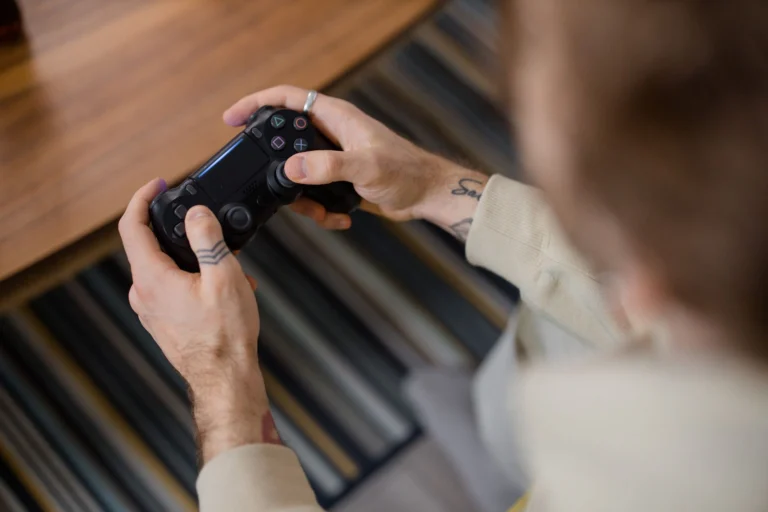
The PS4 launched in November 2013 at $399 — $100 cheaper than the competing Xbox One, and simpler for developers to build for after the PS3's difficult architecture. (PSU)
That combination — a lower price and a more conventional PC-like architecture — let the PS4 dominate its generation almost from day one. It went on to sell approximately 117 million units, comfortably outselling the Xbox One across the entire generation. (headphonesaddict.com)
The PS4's exclusive lineup carried real cultural weight: Uncharted 4: A Thief's End, God of War (2018), The Last of Us Part II, Bloodborne, Horizon Zero Dawn and Spider-Man all launched on the platform, cementing PlayStation's first-party studios as the console's biggest competitive advantage over Xbox — a lead Sony has maintained ever since.
PlayStation 5 (2020–present): the current generation, and the PS5 Pro's place in it
The PS5 launched on November 12, 2020, at $499 for the disc-drive model and $399 for the Digital Edition — a generation defined early by chronic stock shortages driven by global chip supply constraints, followed by a redesigned, smaller "Slim" model on November 29, 2023, priced at $499.99 for the disc version and $449.99 for digital. (Wikipedia)
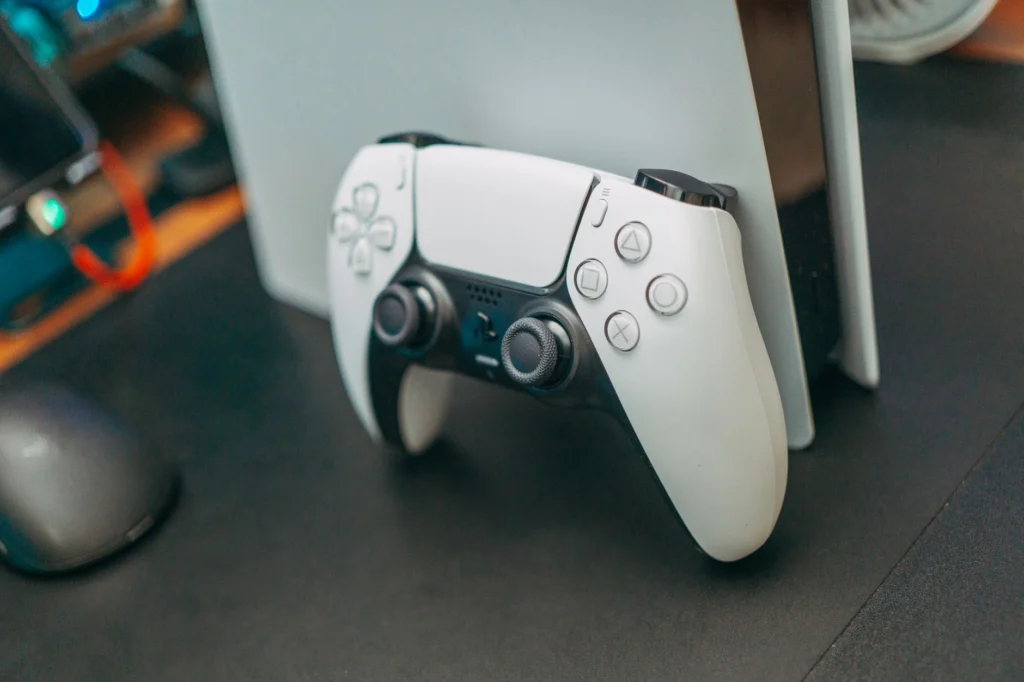
Then, on November 7, 2024, Sony released the PS5 Pro — a mid-generation hardware upgrade rather than a full new console, priced at $699.99. (PSU) The PS5 Pro doesn't run different games than the base PS5 — every PS5 game works on it — but it packs a GPU with roughly 67% more compute units, enabling up to 45% faster rendering and more advanced AI-driven upscaling for sharper 4K image quality. It ships with a 2TB SSD, but notably without a disc drive included (sold separately for $79.99) and without a stand. (CNBC)
The timing of the PS5 Pro's late-2024 launch wasn't an accident. Industry analysts have pointed to Sony positioning the higher-powered hardware specifically ahead of Grand Theft Auto VI — the single most anticipated game of this console generation, and one likely to push graphical demands harder than almost anything else releasing on PS5 hardware. (Notebookcheck)
What's new in 2026
Sony has continued iterating on the PS5 Pro through 2026 rather than simply letting it sit. AMD's FSR 4 upscaling technology is expected to roll out to the PS5 Pro during the year, aimed at delivering sharper 4K visuals and better image quality without a hardware change. On the less welcome side, Sony implemented a notable price increase across its PS5 lineup in the United States effective April 2, 2026, part of a broader pattern of console and component price pressure across the industry. (ixbt.games)
What's actually known about the PS6 — and what's still just leaks
Here's the important caveat before any PS6 specifics: Sony has not officially announced, teased or confirmed the PlayStation 6. Everything currently reported — specs, timing, pricing — comes from industry analysts and known hardware leakers, not from Sony itself. Some of those sources have strong track records; none of it is confirmed.
With that caveat, here's the current state of the rumor mill:
- Timing: Late 2027 to 2028 remains the most widely cited launch window across analysts and gaming publications, though some more recent reports suggest a possible slip to 2028 or even 2029. (Digital Trends)
- Architecture: The PS6 is rumored to use a redesigned AMD architecture with a new Zen 6 CPU, AI built directly into the graphics pipeline, and meaningful improvements to ray tracing and 4K performance — with some leaks suggesting up to triple the rasterization performance of the current PS5. (Push Square)
- Price: This is the rumor drawing the most attention in 2026. Leaker Kepler_L2 has reported that the most recent bill-of-materials estimate for the PS6 is "dangerously near" $1,000 — driven substantially by rising gaming-memory costs affecting the entire electronics industry, not just Sony. (Digital Trends)
If that price rumor holds even roughly, it would represent the most expensive mainline PlayStation launch in the brand's history by a wide margin — more than three times the original PS1's 1995 US price, even before adjusting for inflation.
Thirty years, five consoles, one throughline
What's striking about PlayStation's history isn't any single console generation — it's how consistent Sony's actual strategy has been since the PS3's rough start. Where Nintendo has repeatedly bet on novel hardware gimmicks (motion controls, handheld/console hybrids) and Microsoft has spent generations chasing services and subscriptions, Sony's post-PS3 playbook has stayed remarkably simple: build strong, conventional hardware, and let first-party exclusive games do the actual selling.
That strategy took PlayStation from a console born out of a broken Nintendo handshake to more than 579 million units sold across five generations. Whether the rumored $1,000 PS6 price point tests the limits of that strategy — in a way even Sony's strongest first-party lineup can't offset — is the open question the next few years will answer.