

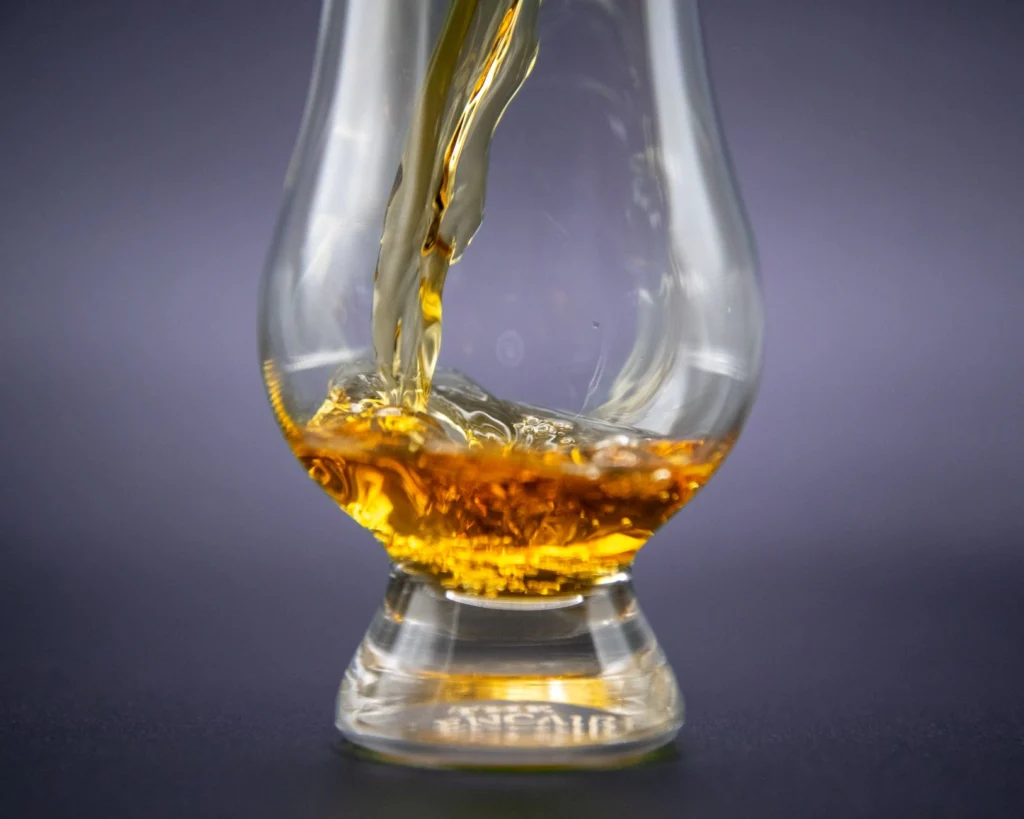
Brandy and whiskey are both aged spirits, but they start from different raw materials and follow different production rules. Brandy is distilled from fruit. Whiskey is distilled from fermented grain. That difference shapes everything from aroma to barrel aging to how each spirit is best served.
What Brandy and Whiskey Are
Brandy is a spirit distilled from fruit. Grapes are the most common base, as in Cognac and Armagnac, but brandy can also be made from apples, pears, cherries, plums, and other fruit. The word brandy comes from the Dutch brandewijn, meaning burnt wine, a reference to the heat used in distillation.
Whiskey is a spirit distilled from fermented grains such as barley, corn, rye, and wheat. The grain bill, distillation method, and aging regime determine whether the final whiskey is light and grassy, spicy and robust, sweet and corn-forward, or smoky and peaty.
How Brandy Is Made
- Fermentation: Fruit is fermented into a fruit wine. The quality and ripeness of the fruit have a direct effect on the final spirit.
- Distillation: The fruit wine is distilled, often twice in copper pot stills, to concentrate alcohol and refine flavor.
- Aging: The clear distillate is aged in oak barrels, which add color, tannins, vanilla, caramel, and spice. The length of aging and the type of barrel shape the brandy’s character.
How Whiskey Is Made
- Malting: For some whiskeys, barley is steeped, germinated, and dried so its starches can convert to fermentable sugars.
- Mashing: Grains are mashed with hot water to extract sugars.
- Fermentation: Yeast is added to the mash, converting sugars into alcohol and creating a wash.
- Distillation: The wash is distilled in pot stills or column stills. Pot stills tend to produce richer, heavier spirits. Column stills tend to produce lighter, cleaner spirits.
- Aging: The distillate is aged in oak barrels, often charred. Oak type, char level, and time in barrel affect flavor, color, and aroma.
Flavor Profiles
Brandy usually shows fruit notes such as apple, pear, apricot, or raisin, depending on the base fruit. Oak aging adds vanilla, caramel, spice, and sometimes nutty or chocolate-like notes. Well-made brandy can be floral and smooth, with a finish that reflects both fruit and barrel.
Whiskey is more grain-driven and often more varied in style. Expect notes of grain, spice, caramel, vanilla, and oak. Bourbon often leans sweet and corn-forward. Rye whiskey is typically spicy and peppery. Scotch whisky can range from light and floral to heavily peated and smoky.
Key Styles
Brandy
- Cognac: Brandy from the Cognac region of France, made primarily from Ugni Blanc grapes. It is known for strict production rules and age designations such as VS, VSOP, and XO.
- Armagnac: French brandy from the Armagnac region, often more rustic and intensely flavored than Cognac.
- Calvados: Apple brandy from Normandy, with distinct apple and spice notes.
- Fruit brandy or eau-de-vie: Brandy made from fruits other than grapes, such as pears, cherries, or plums.
Whiskey
- Scotch whisky: Whisky from Scotland, made from malted barley in the case of single malt, or from a blend of malt and grain whiskies in blended Scotch.
- Irish whiskey: Whiskey from Ireland, often triple-distilled and known for a smooth character.
- Bourbon: American whiskey made primarily from corn and aged in new charred oak barrels.
- Rye whiskey: American whiskey made primarily from rye, with a spicy, robust profile.
- Japanese whisky: Whisky from Japan, often modeled on Scotch production methods.
- Canadian whisky: Whisky from Canada, often lighter in body and flavor.
Serving Brandy and Whiskey
Brandy is commonly served neat at room temperature in a snifter so the aromas can collect. A drop of water can soften the alcohol and open the fruit and oak notes. In cocktails, brandy appears in the Sidecar, Brandy Alexander, and Sazerac.
Whiskey is often served neat in a rocks glass or Glencairn glass. It can also be served on the rocks, with a splash of water, or with soda. In cocktails, whiskey is used in the Old Fashioned, Manhattan, Whiskey Sour, and Sazerac.
Brandy vs. Whiskey at a Glance
| Feature | Brandy | Whiskey |
|---|---|---|
| Base ingredient | Fruit, usually grapes | Grains such as barley, corn, rye, and wheat |
| Flavor profile | Fruity, floral, vanilla, caramel, spice | Grain, spice, caramel, vanilla, oak, and sometimes smoke or peat |
| Aging | Oak barrels | Oak barrels, often charred |
| Common styles | Cognac, Armagnac, Calvados, eau-de-vie | Scotch, Irish, bourbon, rye, Japanese, Canadian |
| Serving | Neat, with a drop of water, in cocktails | Neat, on the rocks, with water or soda, in cocktails |
FAQ
What is the difference between Cognac and brandy?
Cognac is a specific type of brandy produced in the Cognac region of France under strict rules for grape varieties, distillation, and aging. All Cognac is brandy, but not all brandy is Cognac.
What does Single Malt mean in Scotch whisky?
Single Malt Scotch whisky is made from 100 percent malted barley at a single distillery. It is a defined category and often shows the distinct character of that distillery.
Is aging always necessary for brandy and whiskey?
Not always. Many brandies and whiskeys are oak-aged, and named styles such as Cognac, Scotch, and bourbon have aging rules. Some fruit eau-de-vie can be clear and unaged, so the category is broader than the barrel-aged examples most people know.
If your company or product is mentioned in this article, you're welcome to share it.


