

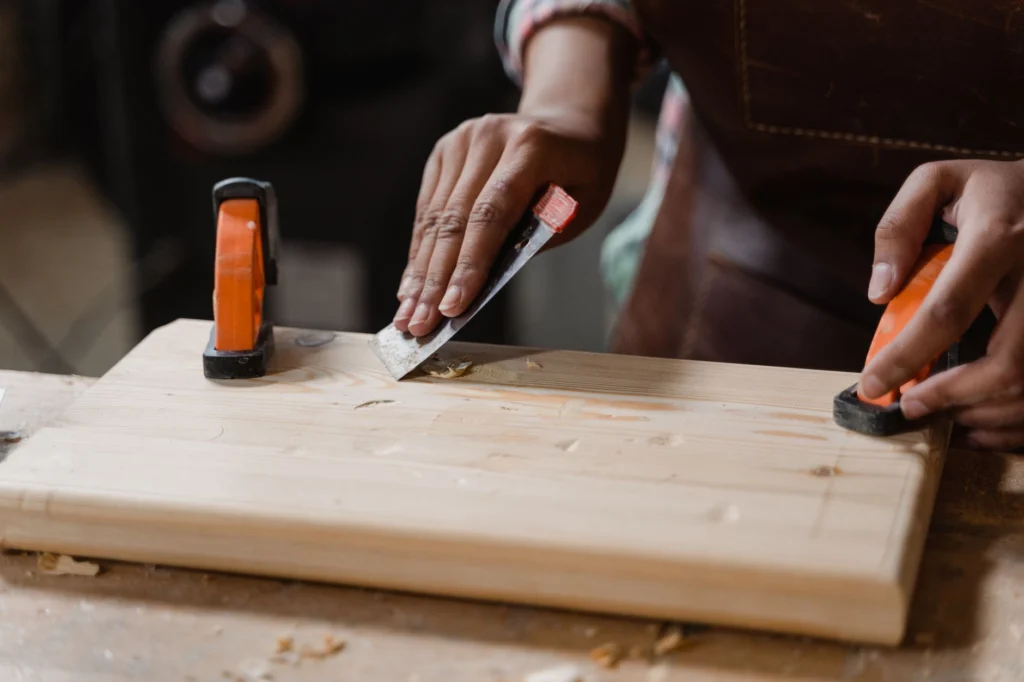
Woodworking has seen a genuine resurgence in recent years, particularly among people whose professional lives are almost entirely digital, and the pattern isn’t really about nostalgia for a pre-technology era — it’s a fairly specific, well-documented response to a specific kind of fatigue that knowledge work produces.
The ‘tangible output’ factor
Occupational psychology research on job satisfaction has consistently identified the absence of tangible, visible completion as a real source of dissatisfaction in knowledge work — a software engineer or analyst can work for months on something that never resolves into a physical, finished object they can point to. Woodworking, almost uniquely among accessible hobbies, offers the opposite: a project with a clear start, a clear end, and a physical object you can hold, use, and show other people, which several researchers studying “flow” and craft-based leisure specifically link to measurable increases in reported life satisfaction among people whose day jobs lack that quality.
Starting realistically, not aspirationally
The single most common reason beginners abandon woodworking within the first few projects is starting with a project that’s too ambitious relative to their tool set and skill — a beginner attempting a complex joined furniture piece with hand tools alone, for instance, is signing up for a frustrating first experience that has little to do with their actual aptitude. The more sustainable entry point is simple, useful projects with forgiving tolerances — a cutting board, a simple shelf, a basic box — that build real technique (accurate measuring, straight cuts, basic joinery) without requiring the precision that furniture-grade work demands.
Woodworking’s appeal for screen-fatigued professionals isn’t really about wood. It’s about ending a session with something finished you can actually touch — which is exactly what a lot of digital work never gives you.
The tool investment question
New woodworkers often either underinvest in a few critical tools (a genuinely sharp chisel and an accurate measuring setup matter more than most beginners assume) or overinvest in an expensive full workshop before knowing whether the hobby will stick. The more common advice from experienced woodworkers is to rent or use a shared makerspace for larger stationary tools initially, and invest personal money first in the smaller precision hand tools that determine whether early projects actually turn out well, since a shaky first few projects — often caused by cheap, imprecise measuring tools rather than lack of skill — are what actually drive most beginners to quit.