

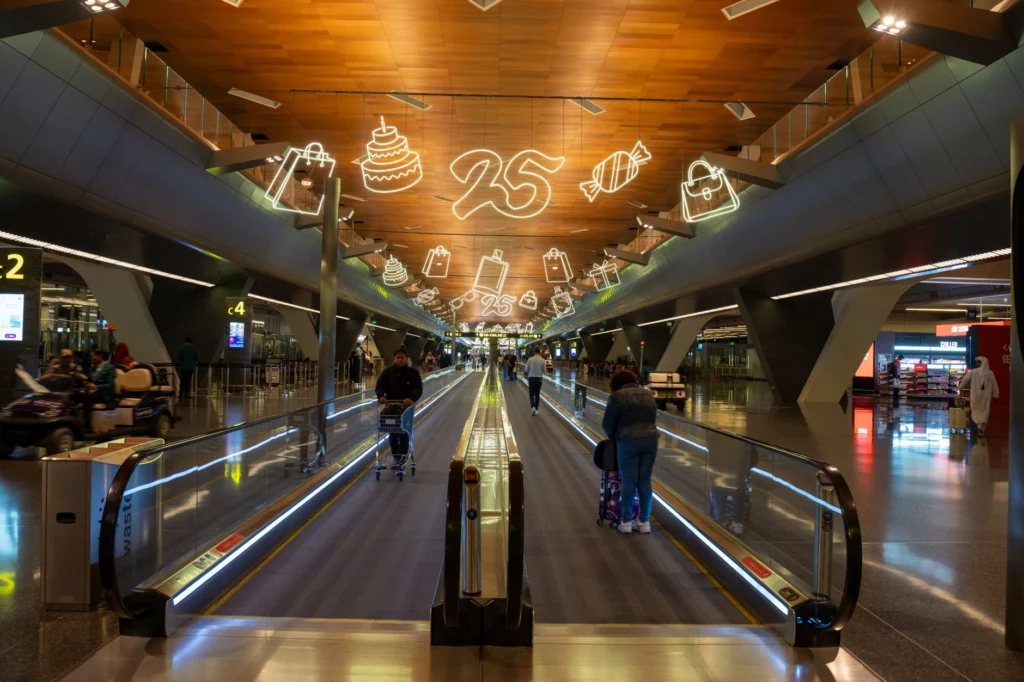
Anyone who’s cleared security only to discover their gate is a fifteen-minute walk past a gauntlet of shops and restaurants has experienced deliberate design, not incidental layout. Airport retail is a major, carefully engineered revenue stream, and understanding how the system is built to work makes the whole experience noticeably less stressful.
The economics behind the layout
Non-aeronautical revenue — retail, food, parking, lounges — makes up a substantial share of total airport income at most major hubs, in some cases exceeding revenue from airline landing fees entirely. That economic reality directly shapes terminal design: gates are frequently positioned to route passengers past the highest concentration of retail, and the psychological state of someone who has just cleared security (relieved, with time to kill, often stressed enough to want a distraction) is well understood by airport retail planners as a genuinely lucrative moment to capture spending.
Practical tips that follow from understanding this
Knowing the layout is designed to slow you down changes the practical calculus: checking your specific gate and the airport’s terminal map before clearing security, rather than after, lets you judge whether you actually have retail-browsing time or need to head straight to your gate. Lounge access — through a premium credit card, elite status, or a day pass — is worth pricing out specifically at airports with weak free amenities, since the lounge model exists in part because airports know a meaningful subset of travelers will pay to opt out of the general terminal retail experience entirely.
The walk to your gate isn’t the shortest path. It’s the most profitable one — and once you know that, you can plan around it instead of being surprised by it.
The TSA PreCheck and Global Entry math
For anyone who flies more than a couple of times a year domestically, TSA PreCheck’s application cost is straightforward to justify purely in time saved — the program consistently cuts security wait times to a fraction of standard lines at most major airports. Global Entry, which includes PreCheck and adds expedited U.S. customs re-entry, costs only slightly more and is generally the better default choice for anyone who travels internationally even occasionally, since there’s little practical downside to having the broader coverage.