

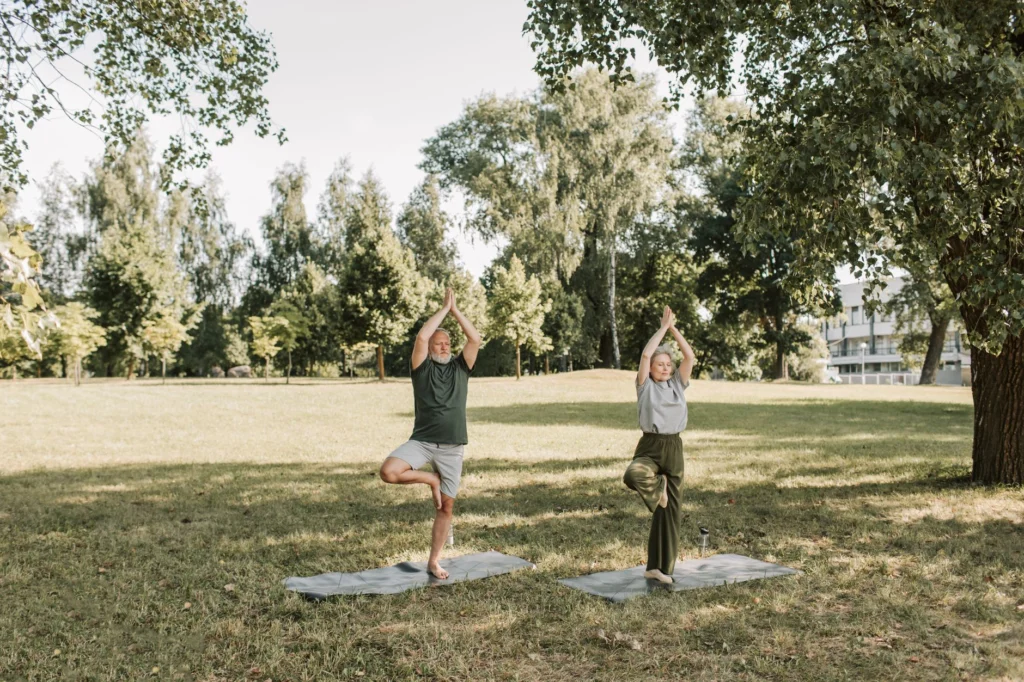
Biohacking coverage skews heavily toward the expensive and exotic — cryotherapy chambers, elaborate supplement stacks, blood plasma treatments — largely because those make better content than the interventions with the actual strongest evidence behind them, which are, almost without exception, cheap, unglamorous, and repeatedly validated across huge population studies rather than small biohacker case studies.
What the strongest evidence actually supports
Regular moderate exercise remains the single most consistently validated longevity intervention across the entire research literature, with cardiovascular exercise specifically linked to reduced all-cause mortality in study after study, at a dose far lower than most fitness content implies — roughly 150 minutes a week of moderate activity captures most of the benefit, with diminishing but still positive returns beyond that. Sleep is close behind: consistently getting seven to nine hours, on a reasonably regular schedule, is associated with better outcomes across nearly every major disease category researchers have studied, from cardiovascular disease to cognitive decline, and chronic short sleep is one of the most robustly documented risk factors in all of preventive medicine.
Strength training, historically under-emphasized relative to cardio in longevity messaging, has accumulated increasingly strong evidence specifically for maintaining muscle mass and bone density into older age — a major predictor of independence and fall-related mortality risk later in life — making it arguably underrated relative to its evidence base.
Where the expensive interventions have weaker support
Cold plunges and sauna use both have some genuine supporting research — particularly sauna use, which has reasonably good observational evidence linking frequency to reduced cardiovascular mortality — but the evidence is considerably thinner than the exercise and sleep literature, and much of the popular cold-exposure content extrapolates well beyond what the actual studies show. Most longevity supplements marketed aggressively to a biohacking audience — NAD+ precursors, various “anti-aging” compounds — have promising early or animal-model data but have not yet been validated in the kind of large, long-term human trials that would justify the confidence with which they’re often sold.
The unglamorous truth about longevity science: the interventions with the most evidence are also the cheapest ones, which is exactly why they get the least marketing attention.
None of this means novel interventions are worthless to explore — early research on genuinely promising compounds deserves continued study. But for anyone optimizing for actual, evidence-backed longevity rather than the feeling of doing something sophisticated, the unglamorous basics — sleep, moderate cardio, resistance training — remain, by a wide margin, the best-supported place to put your effort and money.