

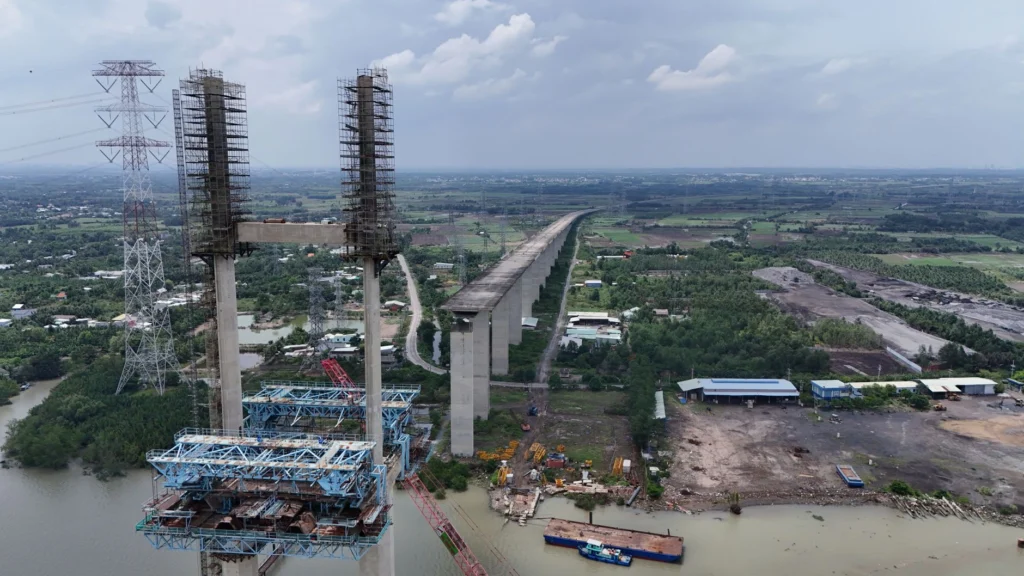
A genuine mega-project — the kind measured in tens or hundreds of billions of dollars — is never purely an engineering exercise. It’s a statement about a country’s ambitions, a bet on a particular economic future, and frequently a geopolitical signal aimed as much at rival nations as at the project’s actual users.
Building entire cities from scratch
Saudi Arabia’s NEOM project — a planned urban region in the country’s northwest, anchored by a linear city design called The Line — is the most ambitious current example of a country attempting to build an entirely new economic center rather than expand an existing one. The logic behind projects like this is straightforward even when the execution is extraordinarily difficult: a country dependent on a resource with a finite horizon (oil, in Saudi Arabia’s case) has a strong incentive to force the creation of a diversified, high-tech economic base rather than wait for market pressure to do it, and a mega-project is one of the few tools capable of concentrating enough capital and political will to attempt that in a single generation rather than several.
Connecting what geography kept apart
Bridge and tunnel mega-projects follow a different logic: connecting regions that geography or historical rivalry kept separate, often unlocking trade and labor mobility that reshapes the economics of an entire area. The Øresund Bridge connecting Denmark and Sweden turned two previously distinct metro economies into a genuinely integrated labor market. China’s high-speed rail network, built at a pace with no real historical precedent, did something similar at a continental scale, compressing travel times between major cities enough to fundamentally change where people choose to live and work relative to where they’re employed.
The pattern behind the ambition
What separates a mega-project that reshapes a country’s trajectory from one that becomes a cautionary tale of cost overruns and stalled construction usually comes down to a less glamorous factor than the engineering: whether the underlying economic demand was real, or whether the project was built primarily as a symbol of ambition with the economics worked out after the fact. The projects that succeed tend to solve a constraint that was already genuinely limiting growth; the ones that struggle tend to have been justified in reverse, with the case for the project built to match a decision that had already been made politically.