

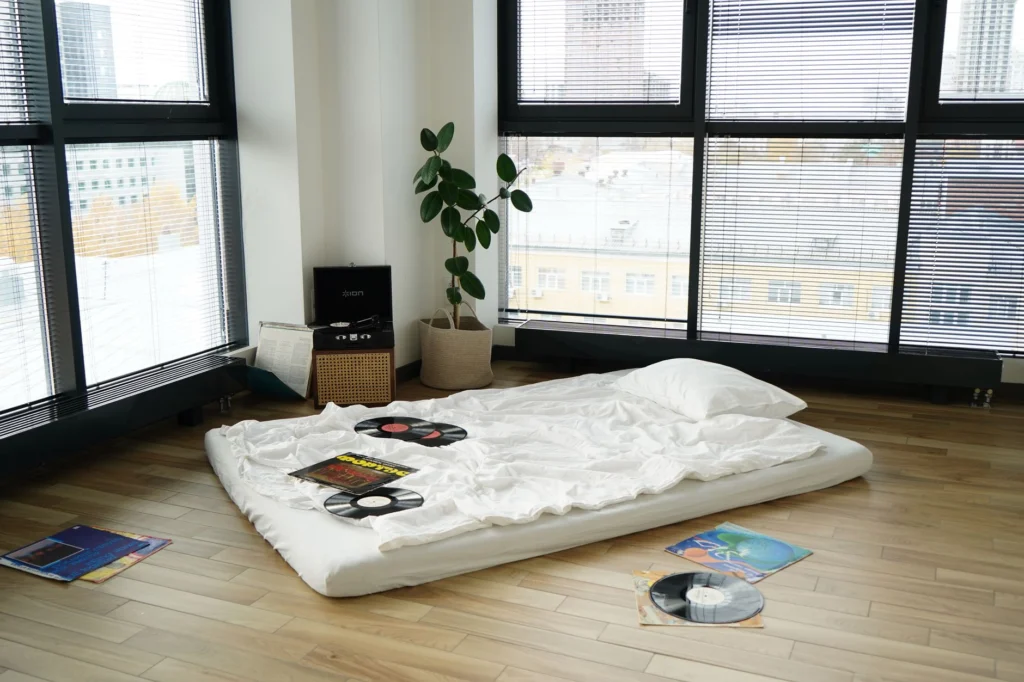
Minimalism as a cultural movement gets reduced, visually, to a specific aesthetic — white walls, a capsule wardrobe, a nearly empty room. That aesthetic is a real and valid personal preference, but it’s a fairly shallow reading of what the underlying psychological research on possessions and wellbeing actually supports, which points toward something more about decision-making than decor.
The real mechanism: decision fatigue
The strongest research-backed case for owning less isn’t aesthetic — it’s that every possession represents an ongoing stream of small decisions (where to store it, whether to keep it, whether to clean or maintain it), and psychological research on decision fatigue shows that the cumulative cognitive load of many small decisions measurably degrades the quality of later, more important decisions in the same day. Reducing the sheer number of low-value decisions embedded in daily life — including decisions about physical possessions — is a well-supported way to preserve mental bandwidth for decisions that actually matter, independent of whatever a person’s home looks like.
Where the aesthetic version misses the point
A curated, photogenic “minimalist” home that required constant maintenance, an expensive ongoing wardrobe refresh, and significant mental energy spent maintaining the aesthetic itself can, ironically, generate more of exactly the cognitive load the underlying psychology suggests minimalism is supposed to reduce. The research-aligned version of minimalism isn’t about how a space looks to others — it’s about genuinely reducing the number of things a person has to think about, which for some people means an austere, visually minimal home, and for others means a cluttered-looking but functionally simple space where nothing requires active decision-making because everything already has an obvious place and purpose.
The measure of whether minimalism is working isn’t how the space photographs. It’s whether you’re spending less mental energy managing your stuff than you were before.
A more useful starting point than ‘own less’
Rather than starting from an arbitrary target (a specific number of items, a capsule wardrobe size), the more evidence-aligned approach is to audit for genuine decision friction: which possessions require ongoing choices, upkeep, or mental tracking, and which ones simply exist without demanding anything from you. Reducing the first category tends to produce most of the psychological benefit research associates with minimalism, while the second category — even in real volume — often isn’t the actual source of the cognitive burden the aesthetic movement is implicitly responding to.