

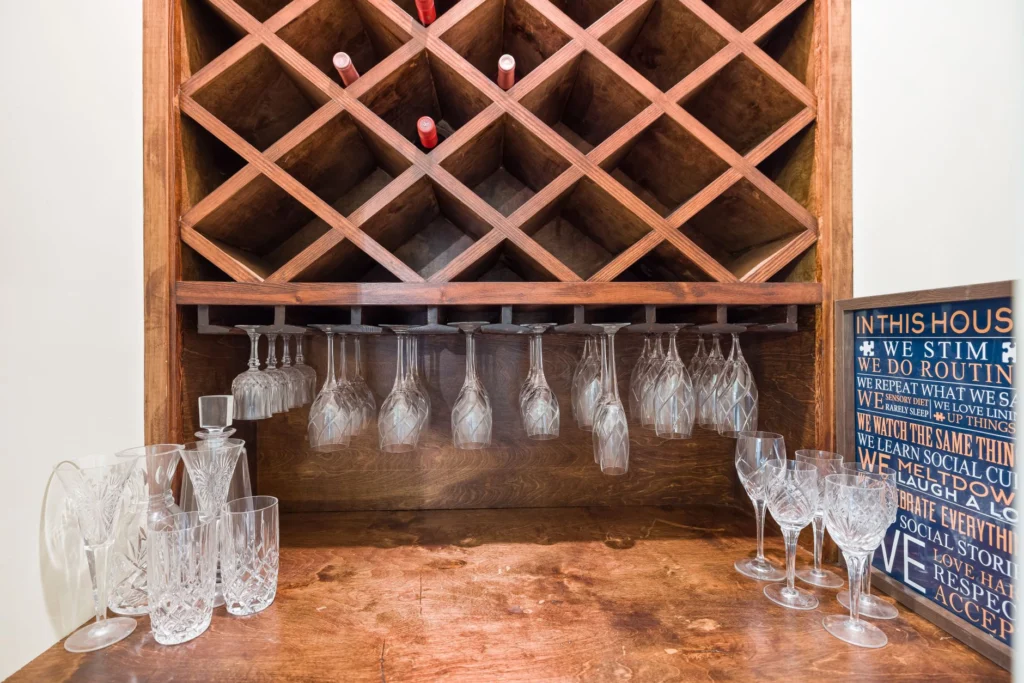
Start with the glasses, not the rack
IKEA sells several stemware storage formats: under-cabinet racks, wall-mounted rails with hooks, cabinet inserts, and free-standing holders. They are not interchangeable. Before buying, measure the tallest glass in your collection from base to rim, the diameter of the base, and the width of the bowl. A standard white wine glass may be 8 to 9 inches tall; a large Burgundy glass can be 10 inches or more and may not clear the cabinet above an under-cabinet rack. Also measure cabinet bottom thickness and door swing. If the rack hangs below a cabinet, it can block a drawer or make the counter feel crowded.
Selection: what actually matters
Amateur move: buying the first rack that looks good and discovering the slots are too narrow or the hooks are spaced for smaller stems. Better approach: count glasses, group by size, and decide whether you need display storage or just clearance. Under-cabinet racks are efficient for daily glasses because they use dead space below the cabinet. Wall rails suit small kitchens but require clear wall space and anchors. Cabinet inserts work when you have a deep cabinet and want glasses hidden from dust. Free-standing holders are best on a bar cart or counter where you have room and want glasses within reach.
Check the load rating and material. Powder-coated steel is common and easy to wipe down. Wood racks can look warmer but may be less forgiving in humid kitchens. If the rack uses hooks, confirm the hook spacing matches your stem width. If it uses slots, confirm the base diameter fits without forcing the glass.
Installation: measure twice, drill once
Amateur move: drilling into a cabinet bottom without checking what is above it. Cabinet bottoms are often thin, and screws can poke through the shelf or split the board. Better approach: read the instructions, identify the mounting points, and use a level. For under-cabinet racks, mark the screw holes with a pencil, drill pilot holes, and use screws that are short enough not to break through the cabinet floor. If the cabinet bottom feels flimsy, add a small backing board to spread the load. For wall-mounted rails, use anchors rated for the rack plus glass weight, or screw into studs where possible. Do not hang a rack over a stove, sink, or high-traffic walkway.
Loading and placement
Hang glasses by the base, not the bowl. Leave about an inch between glasses so they do not knock together when you reach for one. Put the heaviest or largest glasses on the lowest and most accessible rack. Keep the setup near the area where you pour, but away from heat, steam, and direct sunlight. If the rack is under a cabinet, add a small LED strip only if it is rated for kitchen use and does not create heat near the glass. Good light helps you see dust and chips.
Care and small repairs
Dust the rack with a microfiber cloth every few weeks. Hand wash stemware rather than putting delicate glasses in the dishwasher, and check the rack screws every few months. If a hook loosens, tighten it before it drops a glass. If a glass chips at the rim or base, retire it; a chipped base can fail while hanging.
Budget: buy for the glasses you own
The cheapest rack is not a bargain if it holds only six glasses and you own twelve, or if it forces you to stack glasses in a way that causes chips. Compare the rack price with the cost of replacing one or two good glasses. A simple steel under-cabinet rack is usually the lowest-cost useful option. A wall rail or free-standing holder costs more but can solve a space problem. Skip decorative extras unless they improve access or protection.
Quick comparison
| Decision | Common mistake | Better check |
|---|---|---|
| Buying | Choosing by look alone | Measure glass height, base diameter, and cabinet clearance |
| Mounting | Using long screws in thin cabinet bottoms | Use short screws, pilot holes, and a backing board if needed |
| Loading | Packing glasses tightly | Hang by base and leave space between glasses |
| Placement | Hanging over a stove or sink | Keep away from heat, steam, and traffic |
| Maintenance | Ignoring loose screws | Dust regularly and tighten hardware |
FAQ
What is the best IKEA wine glass holder for a small kitchen?
An under-cabinet rack or a wall-mounted rail usually saves the most space. Measure the drop below the cabinet and the wall space before choosing. Keep the counter clear and avoid hanging glasses where they can be bumped.
How do I know if my glasses fit?
Measure the tallest glass, the base diameter, and the widest part of the bowl. Check the rack dimensions and hook or slot spacing. Oversized glasses may not fit under a cabinet or in a narrow slot.
Can I mount a wine glass rack in a rental?
Under-cabinet racks may be easier to remove than wall anchors, but they still leave screw holes. Use the smallest fasteners that are safe for the load, and check your lease before drilling.
How much weight can an IKEA rack hold?
Follow the product’s stated load limit. Glass weight adds up quickly, especially with large bowls. If the limit is not clear, use a rack with a metal frame and mount it into studs or with appropriate anchors.
If your company or product is mentioned in this article, you're welcome to share it.


