

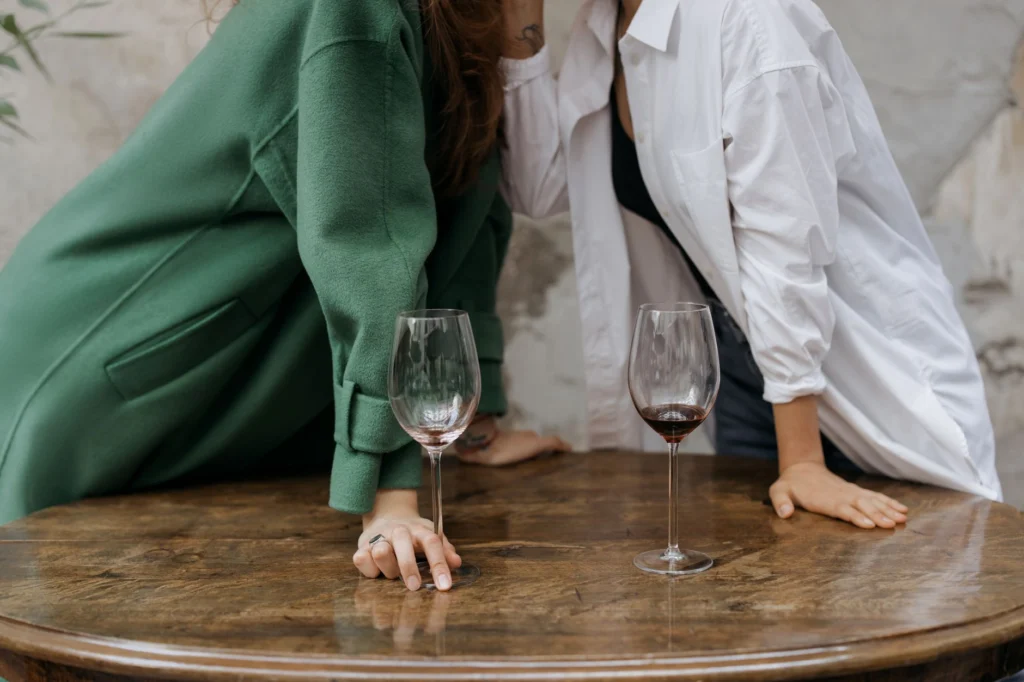
Why Red Wine Color Matters
Red wine color comes from anthocyanins, pigments found in grape skins. The shade in your glass is shaped by grape variety, growing conditions, how the wine was made, and how long it has aged. It is not a quality score by itself, but it gives useful clues about extraction, maturity, and condition.
1. Grape Variety Sets the Base Color
Grape variety is the starting point because skin thickness and anthocyanin levels differ. Cabernet Sauvignon usually gives deep purple color when young. Pinot Noir is typically lighter ruby or garnet and can look translucent. Syrah and Shiraz often show dark color with purple or blue tones. Merlot is usually medium ruby. Sunlight, temperature, and soil also affect pigment development in the skins.
2. Age Shifts Color From Purple to Brick
Young reds tend to be purple or ruby. As they age, anthocyanins polymerize into larger molecules, some of which fall out as sediment. The wine gradually shifts toward garnet, brick red, or tawny. The rim, the thin edge where wine meets glass, is often the best place to see this. A narrow purple rim suggests youth; a wider rim with orange or brick tones suggests maturity.
3. Winemaking Controls Extraction
Maceration, leaving juice in contact with skins, is the main way winemakers extract color and tannin. Longer maceration generally gives deeper color. Fermentation temperature matters too: warmer fermentation can extract more color but may also pull harsher tannins. Cold soaking before fermentation extracts color with less tannin. Co-pigmentation, using other compounds such as tannins to stabilize pigment, can help color hold up over time.
4. Oxygen Can Help or Hurt Color
Small, controlled oxygen exposure can soften tannins and help color stability. Micro-oxygenation is one method used to introduce oxygen in measured amounts. Too much oxygen causes browning and dulling. Brettanomyces, a spoilage yeast, can also cause color loss and off-aromas. Winemakers manage oxygen during fermentation and aging to keep the intended color and flavor.
5. Terroir Changes Pigment Development
Sunlight, temperature, and soil affect grape skins and therefore color. More sunlight can lead to thicker skins and deeper color. Cooler climates often produce lighter wines with higher acidity. Some soils, including iron-rich soils, are associated with deeper color intensity. For example, Barossa Valley wines in Australia often show deeper, more concentrated color than cooler-climate Burgundy wines, though grape variety and winemaking also matter.
6. Red Wine Has a Range of Shades
Red is a broad category. Ruby describes bright, youthful reds. Garnet is deeper and more mature, with orange or brown hints. Brick is a brownish red linked to age and oxidation. Tawny is light brown or amber, common in older fortified wines. Purple signals a young, highly extracted wine. These terms are useful because they describe what you see rather than a vague impression.
7. Color Can Signal Faults, With Limits
Color is not a definitive fault detector, but it can be a warning. Browning in a young wine may point to oxidation or heat damage. Dullness or lack of clarity can suggest poor storage or a wine past its prime. Cloudiness can be normal in some unfiltered wines, but excessive cloudiness may indicate bacterial spoilage. Use color alongside aroma and flavor, not as a standalone test.
Young vs Mature Red Wine at a Glance
| Factor | Young Wine | Mature Wine |
|---|---|---|
| Color | Vibrant purple or ruby | Brick red, garnet, or tawny |
| Anthocyanins | High levels | Lower levels after polymerization |
| Tannins | Firm and astringent | Softer and more mellow |
| Rim | Narrow, purple | Wider, brick or orange |
| Flavor | Fresh fruit, bold tannins | Complex, earthy, softer tannins |
Conclusion
Red wine color is a practical clue, not a verdict. It can show grape variety, extraction, age, and storage history. The next time you pour a glass, tilt it against a white background and look at the core and rim. You will learn more from that quick check than from treating color as a simple ranking.
FAQ
Does darker red wine always mean better wine?
No. Color depth mainly reflects grape variety, growing conditions, and winemaking. Deep-colored wines can be excellent, but lighter wines such as Pinot Noir can be just as serious. Color is one factor among many.
Can color tell me how long a red wine will age?
It can offer clues. A young wine with deep color and high tannin may have the structure to age, but acidity, fruit concentration, and balance also matter. Color alone cannot predict aging potential.
Why do some red wines stain teeth more than others?
Staining depends on anthocyanin concentration, wine pH, and tooth enamel. Wines with more anthocyanins and lower pH tend to stain more readily. People with rougher enamel may notice more staining. Rinsing with water after drinking can help reduce it.
If your company or product is mentioned in this article, you're welcome to share it.


