

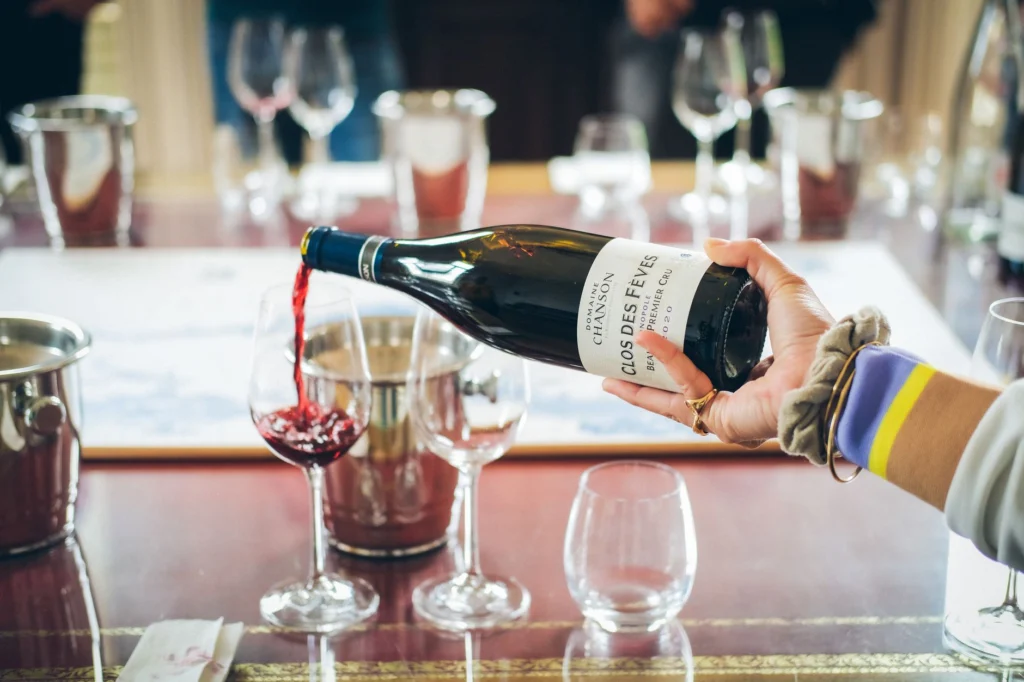
The Perfect Wine Pour
A wine pour is not just a way to move wine from bottle to glass. Volume and technique affect how the wine smells, how it looks, and how it tastes. The target is simple: leave enough room to swirl, keep the wine at the right temperature, and avoid drips.
Why Pour Size Matters
Aroma
Wine releases aromatic compounds when it meets air. A glass filled too high has little room for that exchange. A glass with too little wine gives you less surface area and less wine to smell. A measured pour leaves space for the bouquet to open without drowning it.
Appearance
You can judge color, clarity, and viscosity before the first sip. Tilt the glass against a white background, such as a napkin, to see hue and rim variation. After swirling, the wine that clings to the glass, often called legs or tears, can offer clues about alcohol and sugar. That visual check requires a glass that is not overfilled.
Taste
Swirling needs headroom. A proper pour lets you swirl without spilling and then take a sip that leaves room for the wine to develop on the palate. Overfilling makes swirling awkward and can warm the wine too quickly.
How Much to Pour
For restaurant service and most home drinking, pour about 4 to 5 ounces (120 to 150 ml). At a tasting, reduce that to 1 to 2 ounces so you can compare several wines without overconsuming. For sparkling wine, fill the glass about two-thirds full to leave room for the mousse.
- Aeration: Leave at least half the bowl empty so the wine can breathe.
- Temperature: A less full glass is easier to hold by the stem, which keeps your hand from warming the bowl.
- Spills: More wine means more risk when you swirl or move the glass.
- Pacing: A smaller pour encourages slower sipping and closer attention.
How to Pour Without Drips
1. Use a clean glass
Choose a glass suited to the wine. Wider bowls help full-bodied reds aerate; narrower bowls help whites stay cool. Make sure the glass is clean and free of residue.
2. Hold the glass by the stem or base
This keeps fingerprints off the bowl and your body heat away from the wine.
3. Bring the bottle to the glass
Hold the bottle steadily. Keep the label visible if you are serving guests. Position the bottle opening close enough for control but not so close that the lip touches the glass.
4. Pour slowly down the side
Tilt the glass slightly and let the wine run down the inside wall. This reduces splashing and the glugging sound that comes from pouring straight into the bottom.
5. Stop at the target volume
When the glass reaches 4 to 5 ounces, stop. Do not fill to the rim.
6. Twist the bottle as you finish
Give the bottle a slight twist of the wrist as you lift it away. This catches the last drop at the lip instead of letting it run down the bottle. In formal service, dab the lip with a clean napkin after pouring.
Adjustments by Wine Type
Red wine
Full-bodied reds such as Shiraz or Malbec benefit from a wider glass and enough headroom for generous swirling. Keep the pour at the standard 4 to 5 ounces and let the wine breathe.
White wine and rosé
These wines are usually served chilled. A slightly smaller pour can help them stay cool, and a narrower bowl helps concentrate delicate aromas.
Sparkling wine
Tilt the glass about 45 degrees and pour slowly down the side. This limits foam and preserves bubbles. Fill to about two-thirds full so the mousse has room to settle.
Service Etiquette
When hosting, pour a small taste for yourself first to check the wine. When serving guests, pour from their right side. Hold the bottle by the base or lower body, keep the label visible if practical, and avoid reaching across the table. These habits reduce spills and make service feel calm rather than rushed.
Practice Makes the Pour
The best pour is controlled, measured, and quiet. Use 4 to 5 ounces as your default, leave room for air, and finish with a twist. Once those steps become habit, you can focus on the wine itself instead of the cleanup.
If your company or product is mentioned in this article, you're welcome to share it.


